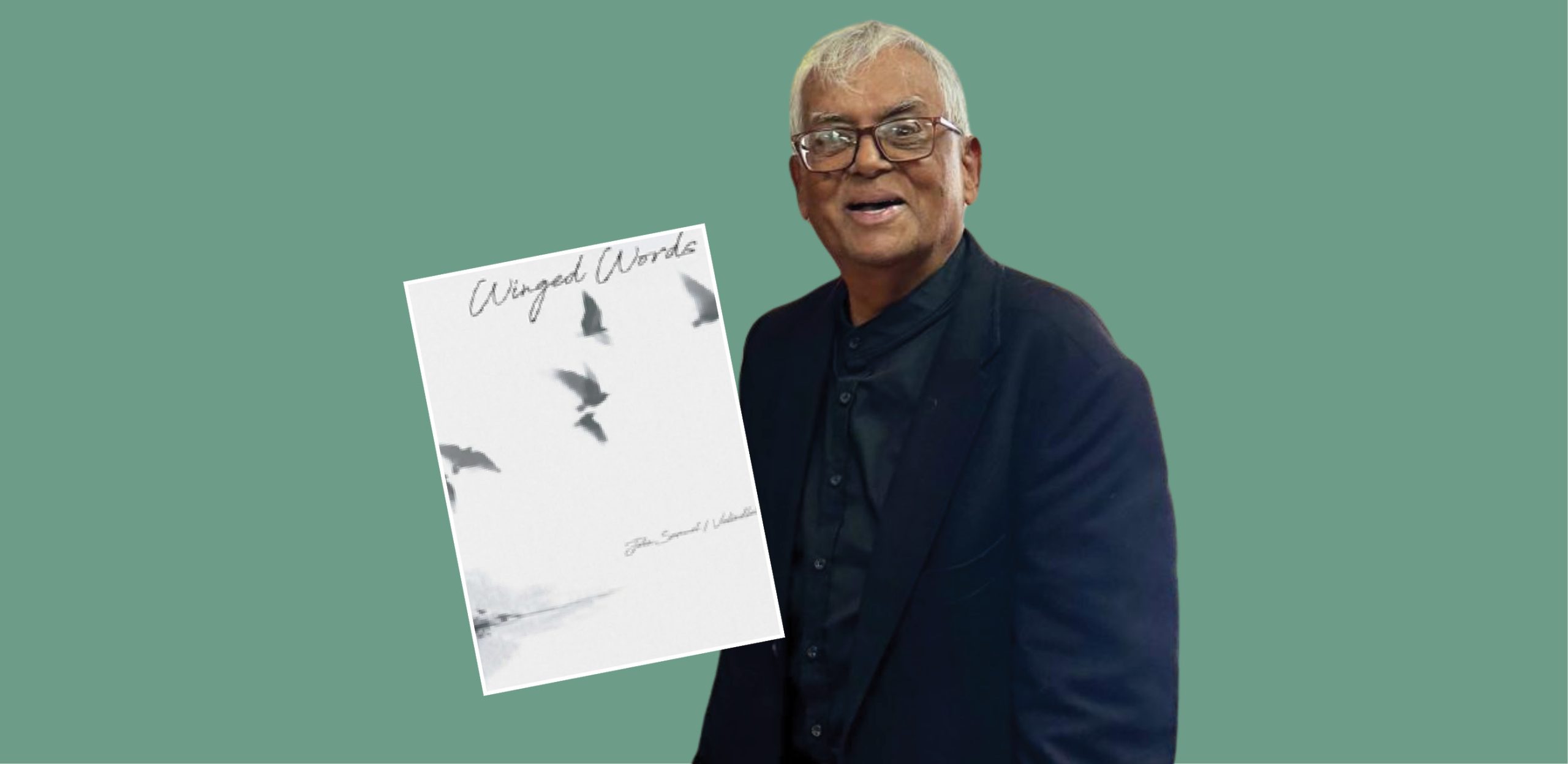
From helping to build South Africa’s post-apartheid education system to working alongside Nelson Mandela and nurturing a lifelong love of poetry, Dr John Samuel’s remarkable journey has been guided by a belief in the power of words to inspire change.
Growing up in the small North Coast village of Gingindlovu, John never imagined his life would one day take him around the world, into government, alongside global leaders and, ultimately, back to the written word.
His father was the headmaster of the local primary school, and although education surrounded him from an early age, he was determined to pursue a different path.
“I always said I would never become a teacher,” he laughs.
After attending school in Tongaat and beginning a law degree at the University of Natal, life took an unexpected turn. He taught briefly before leaving South Africa, spending years living and working in Zambia, England and Ghana before returning home.
Ironically, education became the defining thread of his career.
Following the unbanning of political organisations in 1990, Walter Sisulu invited him to lead the ANC’s education department. After South Africa’s first democratic election, he played a key role in planning and developing the country’s integrated education system.
Later came another extraordinary chapter: serving as chief executive of the Nelson Mandela Foundation.
“Working with Madiba was undoubtedly the highlight of my career,” he says. “It was an unbelievable privilege.”
After Mandela’s retirement, Samuel assisted Oprah Winfrey in establishing her Leadership Academy for Girls before eventually returning to university teaching – perhaps the role he had spent years trying to avoid.
Alongside this distinguished career, another passion quietly accompanied him: poetry.
His first poems emerged during high school, written as a way of making sense of life during a turbulent period in South Africa’s history.
“It began as something very personal,” he explains. “Writing helped me understand what was happening around me.”
Although work often pushed creative writing into the background, poetry never disappeared completely. His latest collection was published almost by accident after a former student, who had started a publishing house, encouraged him to share the manuscripts gathering dust on his desk.
Today, he has published three collections, each exploring different themes.
His second book, Winged Words, remains especially close to his heart. Inspired by folklore collected in rural Eastern Cape communities, the collection explores the relationship between people, birds and the natural world. Accompanied by striking etchings, it resonated strongly with readers who share his appreciation for nature.
Memory is another thread woven throughout much of his work.
“I’m fascinated by how memory shapes who we become,” he says. “Many of my stories and poems begin with small moments that stay with me.”
Now retired, he continues writing when inspiration strikes rather than following a strict routine. His latest project explores the life of John Chilembwe, the Malawian priest who led an uprising against British colonial rule in 1915 – a historical figure whose story has captivated his imagination.
Yet despite his literary achievements, Samuel’s greatest passion remains encouraging others to read and write.
Having recently settled in Ballito, he hopes to work with local schools, introducing young people to poetry and creative writing.
“I’ve seen first-hand how reading aloud can change children’s lives,” he says. “It costs almost nothing, but the impact can last forever.”
He recalls meeting a former pupil decades later, now Dean of the Faculty of Law at the University of Cape Town.
“The one thing he remembered,” Samuel smiles, “was that I used to read stories to the class.”
For a man who once vowed never to become a teacher, it is perhaps the perfect full-circle moment – one where education, creativity and a love of words have shaped not only his own life, but countless others along the way.
Details: Winged Words is available on www.clarkesbooks.co.za