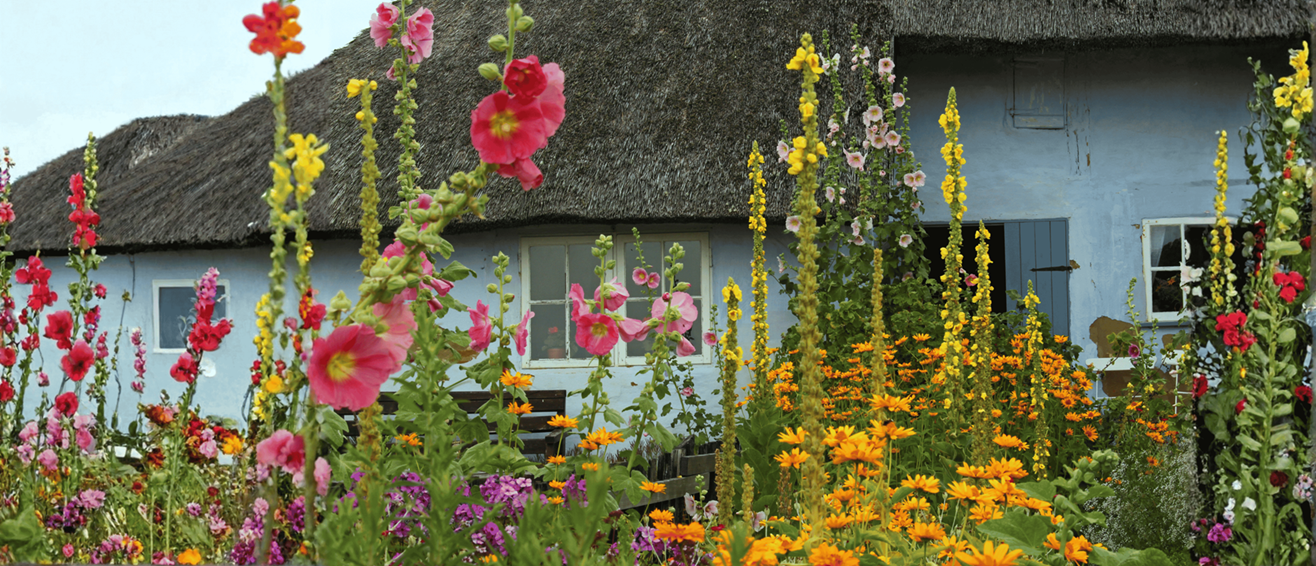
If you are thinking about your summer garden, here’s something new to explore: Chaos gardening!
What’s ‘Chaos gardening’ all about? It is certainly trending on the internet and TikTok. It’s for gardeners who love spontaneous, random planting and letting nature takes its course. No immaculate lawns, trimmed shrubs and precise edges.
There is lots to like. Its less arduous to maintain, it’s a rich haven for pollinators, and there are always surprises as flowers reseed from one place to another. Resilience is the key word, prioritizing plants that are hardy, no fuss growers, water wise and suitable for local conditions.
Get the look
Whether you want to transform your whole garden, just a section of the garden or even a balcony garden the main characteristics of a wild garden are:
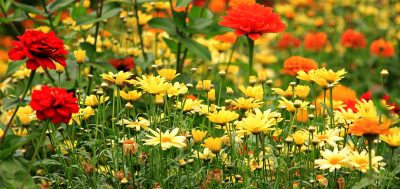
A denser than normal planting. The easiest way to achieve this is to start with a mix of seed. You may still want to do some single variety sowing to create a swathe of colour, texture or some height to draw the eye in a particular direction.
The flow of the garden is organic and informal. Gravel or mulched pathways are a good idea for access through the garden, for watering, weeding if necessary and some strategic thinning out.
Dead heading is optional and flowers can be left to go to seed.
Getting started
The one principle that remains unchanged is that the soil needs to be well prepared before sowing. Should you want to replace some lawn, that first needs to be removed.
Before sowing, spread a generous layer of compost over the surface of sowing area and lightly till it in with a fork or rake it in. This does not disturb the eco system within the topsoil.
Once you are ready to sow, consider using mixed flower variety packs that contain the seed of flowers that bloom at different times and are a mix of different heights. There are mixes for sun or shade, for dwarf or tall flowers.
Once the seed is sown, cover it with a thin layer of soil, press down gently with the back of a rake so that the seeds make contact with the soil, and water lightly so that the seed doesn’t wash away.
Keep the soil moist during germination and don’t weed until the flowers are growing well and it is easy to distinguish between the weeds and the flowers. Or you can just leave the weeds.
Try these
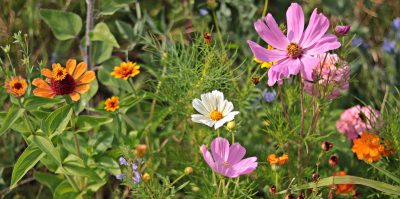
The Kirchhoffs Flower Variety Pack has a sunny selection of spring flowers that are the stalwarts of every flower garden: marigolds, nasturtium, cosmos and sunflowers as well as Colour patch ‘Summer Dwarf’ that is a specially formulated mix of easy to grow dwarf varieties especially suited to hot summer conditions. Different varieties bloom at differing times to create a long-lasting colour effect.
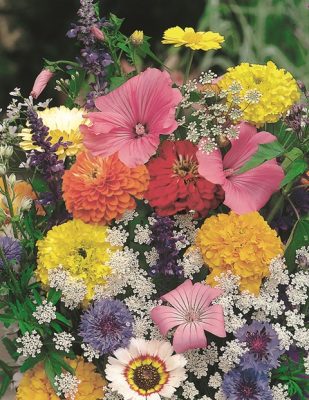
Kirchhoffs Scatter packs (bumper packs) and Colour Patch Mix (smaller packs) are for sun or shade, dwarf or tall mixes. Each packet is a bit of a lucky dip. For instance, the summer tall mix consists of annuals such as asters, candytuft, cleome, cosmos, echinacea, marigolds, lavatera, salvia, and zinnias. They all flower at different times so there is always something new to enjoy.
6 Easy growing Heirlooms from seed
Heirloom flowers are a natural choice for attracting beneficial insects and also for being sustainable plants that don’t need much attention.
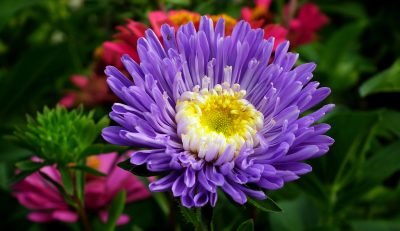
Asters are old fashioned garden flowers with single or double daisy like blooms from late summer through to autumn. ‘Princess mixed’ has double daisy-like flowers that attract pollinators and if left to form flower heads the seed will attract seed-eating birds. In hot gardens asters need afternoon shade but full sun in cooler gardens.
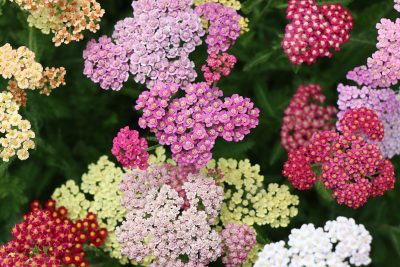
Achillea ‘Fruit Bowl’ grows 70cm to 1m high, and the long flowering stems rise out of clumps of fine, fern like foliage. The blooms have a long vase life. This plant is drought tolerant once established and cutting out dead blooms from the base of the plant encourages continuous flowering.
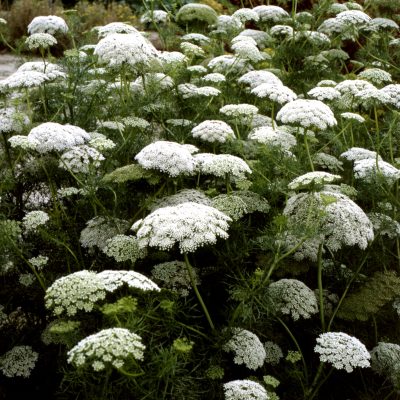
Ammi ‘Green Mist’ also known as Queen Anne’s Lace Flower is a tall, spreading shrub 1.2m high that produces pale green to white lacy flower heads on 100cm stems. Excellent for the vase or bouquets. Because the seeds are very small mix them with fine sand as this makes it easier to spread them evenly. Attracts and supports beneficial insects.
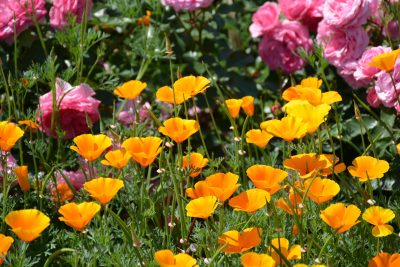
California poppy ‘Kindergarden’ has brilliant orange cup-shaped flowers and fine, feathery leaves. It grows in poor soil, making it an anywhere plant that re-seeds easily. Being indigenous to California, it is perfectly suited to our climate, and unpredictable rainfall. Working compost into the soil will improve the soil conditions and produce healthier plants that flower better.
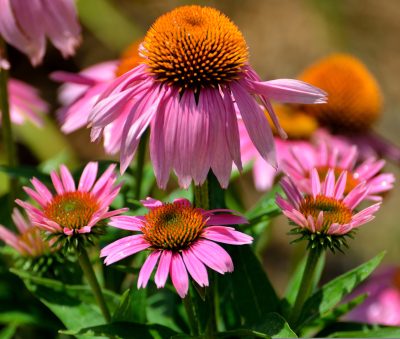
Echinacea also known as Purple Cone Flower is a flowering perennial herb that doubles as a striking garden flower and attracts insects, bees and birds to the garden.. The large daisy-like flowers have a prominent central orange-brown cone on single strong stems in summer. Grow in full sun and water regularly but once established watering can be reduced. In cold areas plants die down in winter.
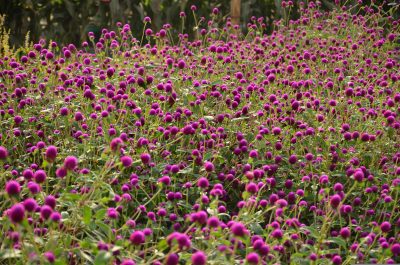
Gomphrena ‘Lavender Lady’ is extremely drought and heat tolerant. Sow thickly to produce a mass of globular lavender flowers that can be used fresh or dried. The compact plants flower prolifically throughout summer.
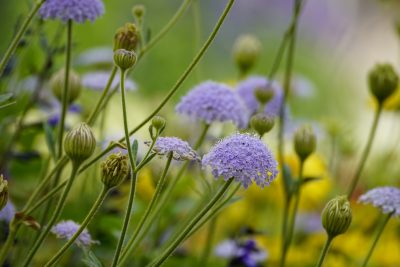
‘Blue Lace Flower’ (Trachymene coerulea) blooms throughout summer. The dainty, star shaped flowers have a fresh scent.
For more information www.kirchhoffs.co.za or buy seed online from www.gropak.co.za
Article and images by Alice Coetzee.