For much of modern history, urban progress has been measured by expansion more buildings, roads and infrastructure. But as cities evolve, a new measure of success is emerging.
The question is no longer how much we can build, but whether we are creating places where people genuinely want to be. Increasingly, the answer lies in our relationship with nature.
Green and blue spaces – forests, coastlines, wetlands, waterways, parks and open space – are becoming some of the most valuable assets in modern cities. They support wellbeing, climate resilience, community connection and long-term sustainability.
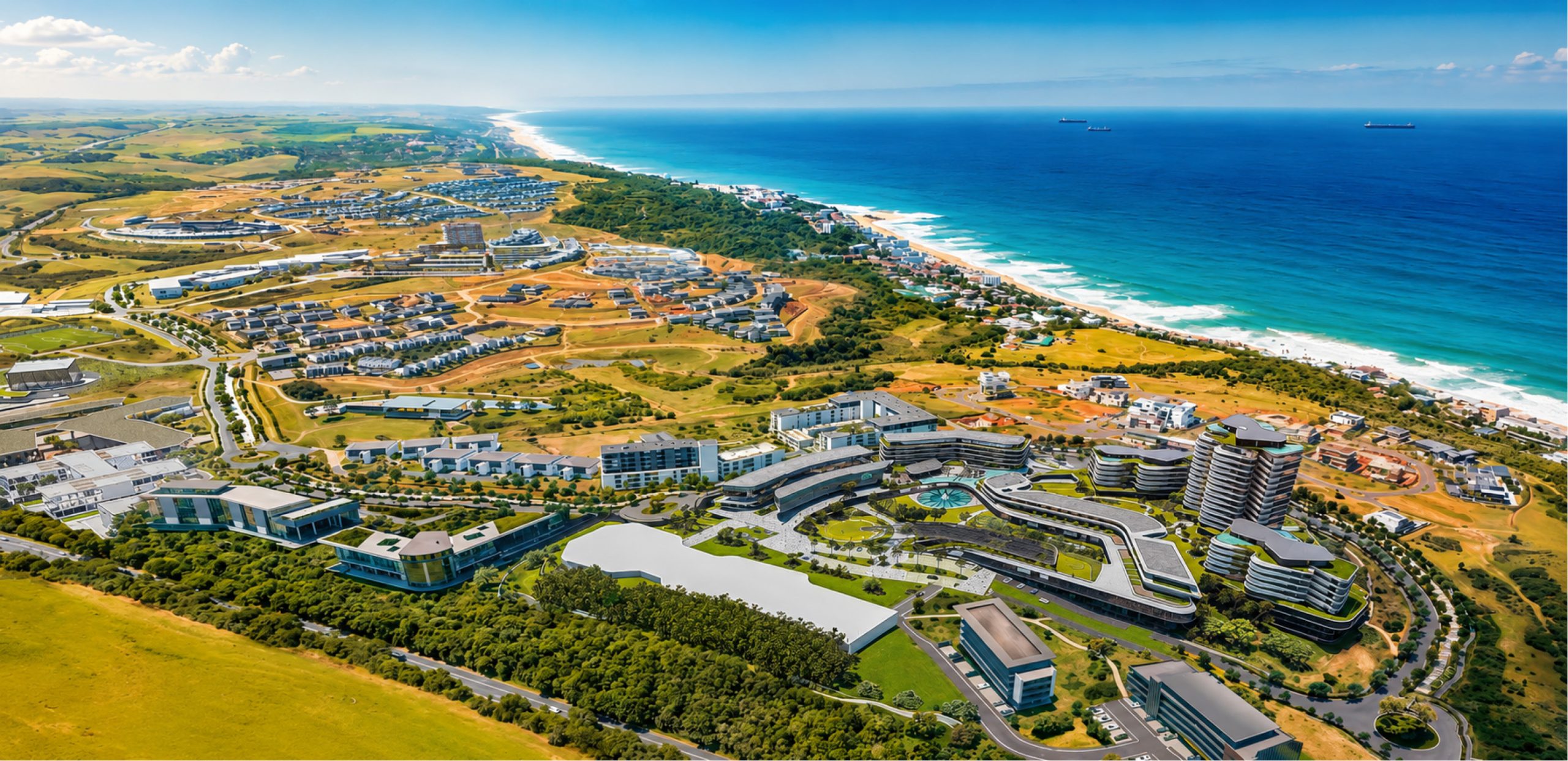
As Sibaya Coastal City takes shape, Devmco Group remains committed to ensuring that growth enhances, rather than displaces, the area’s natural assets. Rather than viewing nature as land awaiting development, the focus has been on integrating it into the fabric of the city itself.
“The most successful cities of the future will recognise nature as part of the infrastructure of a city, not as leftover space between developments. The vision for Sibaya Coastal City is centred on creating an urban environment where the natural landscape enhances everyday life rather than competing with it,” says Schalk Theunissen, Managing Director of Devmco Group.
Access to forest trails, coastlines, outdoor recreation and natural open spaces fundamentally changes how people experience a city. These environments encourage movement, support mental wellbeing, foster social interaction, and create a sense of place that architecture alone cannot achieve. This philosophy is reflected in Sibaya Coastal City’s preservation of more than 60% of the land as coastal forest and green open space.
This commitment is being protected through a dedicated conservation trust, established to look after Sibaya’s natural habitat over the long term. A specialist team focuses on the precinct’s fauna and flora through practical initiatives: removing alien vegetation, keeping forest and beach areas clean, documenting the abundant animal life in the forest, and maintaining the safety and security of walking trails. The trust also helps ensure these spaces can be responsibly used by residents, visitors and the broader community in a safe, secure and meaningful way.
The benefits extend beyond lifestyle. As climate change increasingly influences urban planning, natural systems are becoming critical assets in building resilient cities. Coastal forests, wetlands, dune systems and waterways help regulate temperatures, support biodiversity, manage water systems and protect against environmental pressures.
There is also a compelling economic argument. Developments that successfully integrate natural assets often generate stronger long-term demand because they offer something increasingly scarce and difficult to replicate. “Environmental stewardship and economic growth are not opposing forces,” says Theunissen. “In many cases, they are mutually reinforcing.”
The future of urban development is not about choosing between growth and conservation. It is about finding the balance between the two, and then putting the right structures in place to protect it. As Sibaya Coastal City continues to evolve, it demonstrates what is possible when development works with nature rather than against it.