That school bag might seem harmless, but how it’s packed and carried matters – for health, posture and comfort.
A survey by the National Library of Medicine uncovered that the distribution of weight in a schoolbag is integral to maintaining a healthy posture, and if neglected in its function and design, this becomes a contributing factor to physical ailments like induced neuro-musculoskeletal disorders, moderate cardiopulmonary function, and shoulder, back and hand pain in school goers.
Michal Oster, founding member of school bag brand Totem Bags, says that support and function should play the biggest role when buying a school backpack.
“It’s easy to get caught up in fun designs, the latest trends and bright colours but it is the anatomy of design that should determine what is best for the school going years. Parents should become familiar with this and encourage their children to pack correctly for the day, and only what’s necessary.”
According to Michal, there are eight key features parents should look for when buying a school bag which make all the difference.
Adjustable, padded straps
Look for wide, padded straps to cushion the shoulders. This is vital to avoid unnecessary strain, especially when carrying heavy loads. Some bags come with shoulder strap growth buckles that adjust as your child grows, keeping the bag comfortable and your wallet happier.
Padded back panel
A high-density foam back panel distributes weight evenly across your child’s back, avoiding pressure points and preventing discomfort and long-term damage to the spine.
Durable zips and strong stitching
You need a bag that will withstand daily wear and tear! Look for bags with high-quality, reinforced zips and strong, double-stitched seams.
Water-resistant material
Bags made of durable, water-resistant fabric will keep your child’s items safe from rain, scrapes and spills.
Lightweight frame
Backpacks with internal aluminium frames help maintain the spine’s natural curve and distribute weight evenly for stability and spinal support.
Airflow and ventilation
Bags with an anatomic air system promote airflow, helping to reduce sweaty (and potentially stinky) backs.
Self-standing design
A firm base with a self-standing mechanism make it easy for your child to access their belongings without having to pick the bag up off the floor.
Orthopaedic
A big ‘watch word’ in the school bag aisle is the term ‘orthopaedic’. This is a medical term and should only be used in fully certified designs.
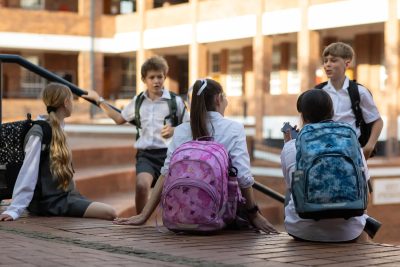
Why proper packing is crucial
Optimising your bag’s anatomy with adequate packing techniques will ultimately be the win-win for the school year. Here are Michal’s top tips for packing a school bag strategically:
Organise school supplies smartly
Start by sorting these into categories and grouping similar items. Keeping everything neat and accessible ensures nothing’s digging into your child’s back during the day.
Don’t throw the weight around
Heavier items should always be placed closest to the back, aligning with the body’s centre of gravity. This reduces pressure on the shoulders and spine.
Most school bags come with multiple compartments – use them! Placing books and devices close to the spine creates better weight distribution, while smaller, frequently used items like snacks or stationery can go in the outer pockets.
Be wise – accessorise
Using accessories such as pencil cases, lunch bags and water bottles helps improve how the bag carries, keeps items accessible and prevents over-packing.
“Investing in a quality school bag is an investment in your child’s health,” says Michal. “With the right bag and proper packing habits, school can remain a place of learning and growth; free from unnecessary back pain and posture issues.”