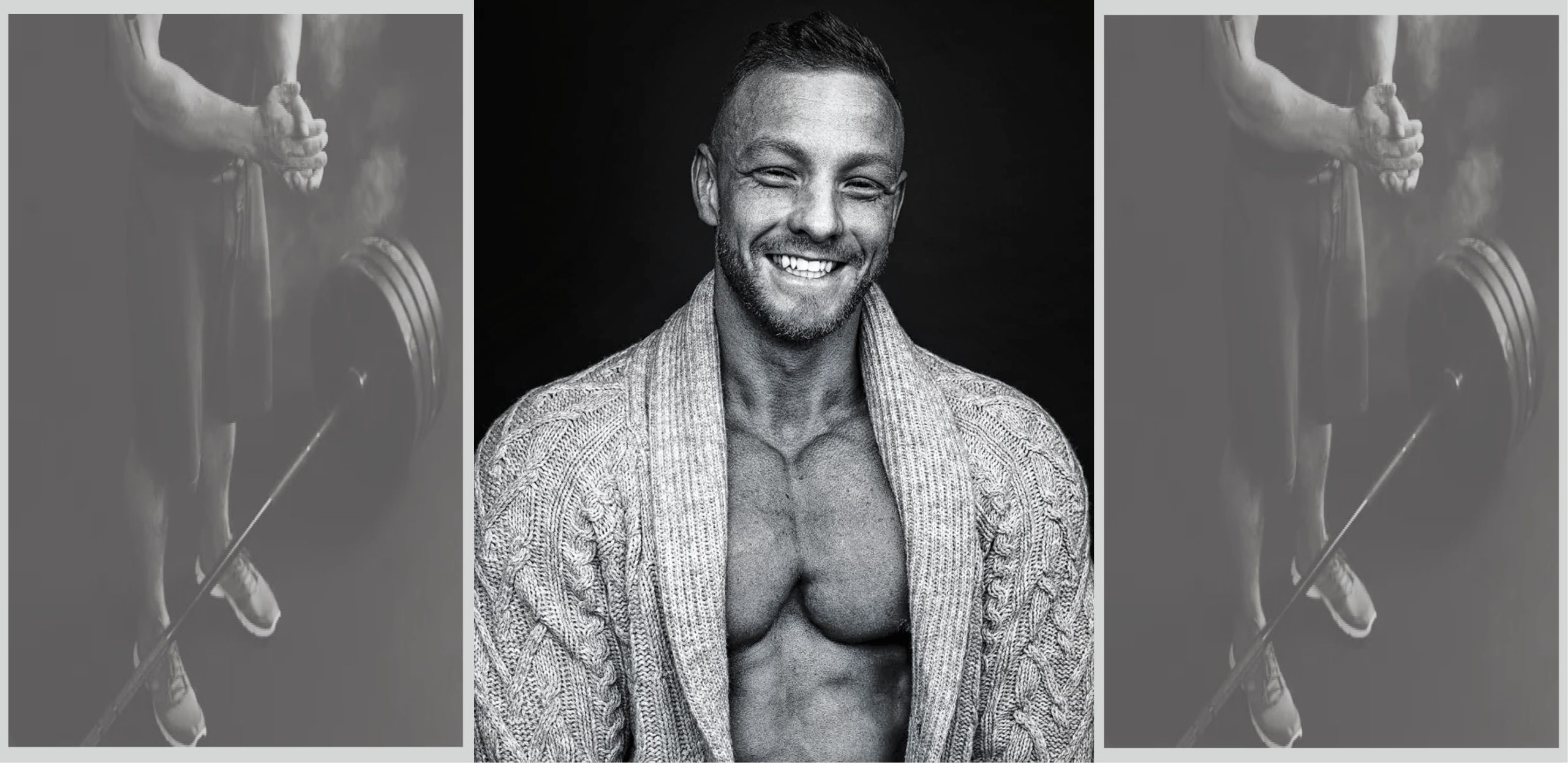
Sheldon de Klerk talks about depression, bodybuilding and the healing power of writing.
In a world obsessed with appearances and accolades, Sheldon de Klerk cuts a striking figure. A chartered accountant, South African middleweight bodybuilding champion, business owner and now, author of Angel of Mercy, Sheldon’s list of achievements is impressive. But behind it all lies a different story. One that speaks of childhood depression, suicidal ideation, imposter syndrome and the quiet discipline of healing.
Sheldon grew up in Pietermaritzburg, where a diagnosis of depression in Grade 3 set the stage for a life shaped by inner conflict. “Suicide always felt like an option to me,” he says frankly. “It sounds harsh, but that was just how my mind processed life from a young age.”
Growing up in an environment where mental health was misunderstood and often dismissed with a simple “stop being sad,” Sheldon channelled his turmoil into overachievement. He became a CA, built a career in finance, sculpted a world-class physique, and pursued excellence in every corner of his life. “These things looked like success,” he admits. “But they were actually just ways of coping.”
Angel of Mercy, his debut novel, was born from this complex inner world. Initially a form of journalling through several suicide attempts, the book morphed into a fictionalised exploration of despair, depression and the fragility of the human condition. Structured as a collection of short stories, each chapter unpacks a different character’s dark night of the soul, with suicide often lurking as the only perceived resolution.
“I chose fiction because I didn’t feel qualified to write as an expert on mental health,” Sheldon explains. “Writing gave me the freedom to explore emotion without claiming authority. It felt safer to create distance between myself and the story.”
Despite this, the emotional truths are raw and honest. Readers have described needing to pause between stories, to sit with the weight of what they’ve just read. “It’s not a get-better book,” Sheldon says. “It’s a book for people who have been through something, who are perhaps still in the thick of it, and need their reality acknowledged.”
What’s striking is his lack of pretence. He’s quick to reject the notion of being a mental health guru, but he also doesn’t shy away from responsibility. “I do think I have a platform now,” he says. “If someone sees something sincere in what I share and it makes them feel seen, that’s worth something.”
Mental health, for Sheldon, is less about perfect healing and more about building awareness. He talks about journalling as a tool, about recognising his own ‘baseline’ and understanding the moments when his processing abilities are compromised. One of the most profound things he’s learned? “You’re not supposed to feel miserable all the time. Misery has its place. But if getting out of bed takes 80% of your energy, something’s off. And you need help.”
It’s this awareness that permeates everything he does, including bodybuilding. A sport rooted in routine and perseverance; it became a sanctuary. “The gym is where my mind is quiet,” he says. “It’s voluntary suffering. When you’ve got 150kgs on your back, you’re not worrying about anything else.”
Now living in Salt Rock with his wife and preparing for the arrival of their first child, Sheldon is entering a new chapter, one that brings with it fresh perspective and perhaps, new stories to tell.
He’s not rushing the next book, nor chasing another title. What drives him now is sincerity. “True healing is when you can suffer something and then be grateful for it. That’s what I’m aiming for.”
Details: IG: @shelds_dk