Two remarkable KwaZulu-Natal reserves where conservation, community and unforgettable wildlife experiences are part of an incredible story.
KwaZulu-Natal has no shortage of safari destinations, but some leave a deeper impression than others. Not simply because of the wildlife sightings or beautiful lodges, but because of the people behind them and the role they play in protecting both wilderness and communities.
We recently visited two very different Big Five destinations, Tembe Elephant Park in the far north of Maputaland and mFulaWozi Wilderness in the heart of Zululand.
One is defined by ancient sand forests, giant tuskers and an unhurried sense of solitude. The other combines sweeping landscapes and five-star luxury with a remarkable story of conservation and community partnership.
While each offers its own unique safari experience, both share a common thread, proving that tourism, conservation and meaningful community upliftment can thrive together.
 Tembe Elephant Park
Finding Africa’s soul among giant elephants and quiet roads
The drive north from Durban is a scenic one, changing slowly from sugar cane fields to Zululand bushveld with its golden acacias and then over the Lebombo mountains to Maputaland. We stopped enroute at Mkuze at the beautiful Ghost Mountain Inn to stretch our legs and enjoy a delicious lunch.
Tembe Elephant Park sits in the far northern corner of KwaZulu-Natal, in Maputaland, a 30 000-hectare reserve known for its elephants and sand forest ecosystem. Tembe is often described as one of South Africa’s quieter Big Five reserves, and that becomes obvious quite quickly. There is only one guest camp inside the park, and vehicles are limited, which immediately changes the pace of everything.
We arrived later than planned and missed our first game drive, but the bush doesn’t really care about your schedule. Instead, we were welcomed with a traditional choral performance before being shown to our tented accommodation.
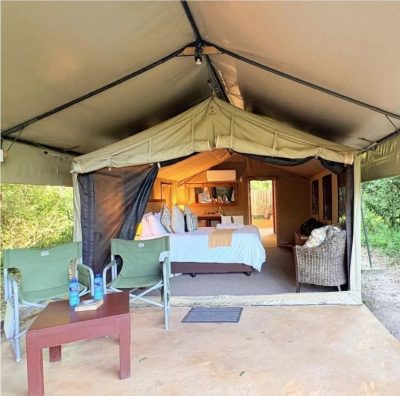
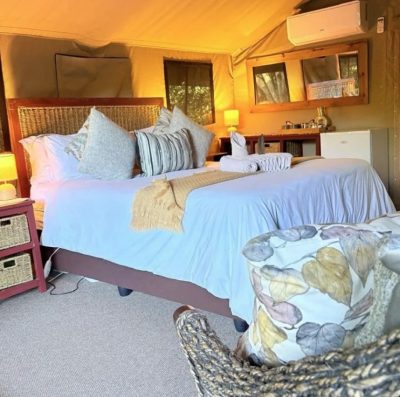
The tents are comfortable without being overdone. Air conditioning, proper beds, an en-suite bathroom, a tea station and an outdoor shower that quickly becomes one of the best parts of the stay. There is a simple rhythm to it all. You’re in the bush, but you’re not roughing it.
Even though we were short on time that first afternoon, the lodge still took us out for a quick drive. Sightings were minimal. Warthog. Nyala. Common waterbuck. Tracks in the sand, and fresh spoor. But it still felt like a proper introduction to the place. Tembe doesn’t force the wildlife experience. You either find it, or you don’t, and that’s part of the appeal.
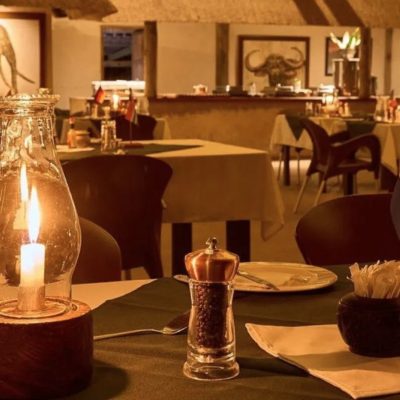 Dinner that night was hearty and generous … tomato soup, game steak, chicken, vegetables and a very well-received dessert of poached pear and ice cream. It’s the kind of food that fits the setting perfectly, uncomplicated and filling after a long day outdoors.
One of the most noticeable things about Tembe is the silence. Not total silence, but that bush silence where you suddenly realise how much background noise you normally live with. Even walking back to your tent at night feels different. There’s a sense of space and stillness that takes a while to settle into.
The following morning started early, as it does in the bush. After an outdoor shower under the trees, we set off just after sunrise for a full morning drive.
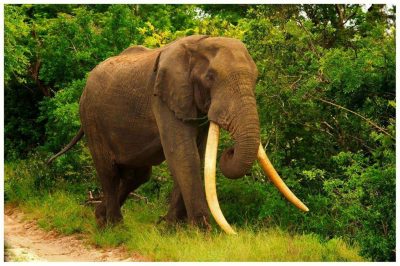
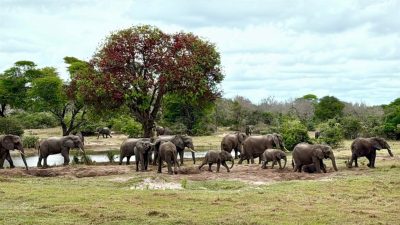
Tembe is home to the Big Five, but its the reserve’s 250-plus huge tuskers that attract elephant lovers from around the globe and remain the highlight of any visit. Magnificent, wild but very relaxed when encountered, thanks to the park’s low impact tourism.
Our guide, Sakhile, had an incredible ability to read the bush, picking up movement and tracks long before anyone else noticed anything.
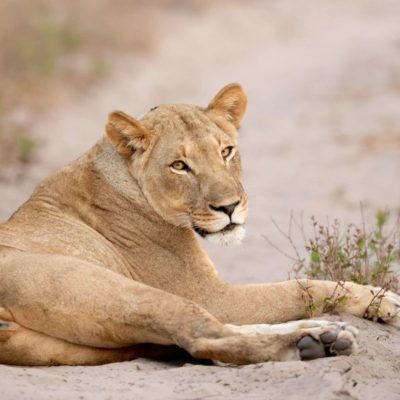 Then, out of nowhere, a lion emerged from the bush and chased a bushbuck into the thickets. It all happened very quickly and deep in the vegetation, so there was no neat viewing moment, but that’s exactly what made it feel so real. We didn’t see the full sequence, just fragments of it, and then silence again afterwards. Later, the pride returned with cubs, as if nothing had happened at all.
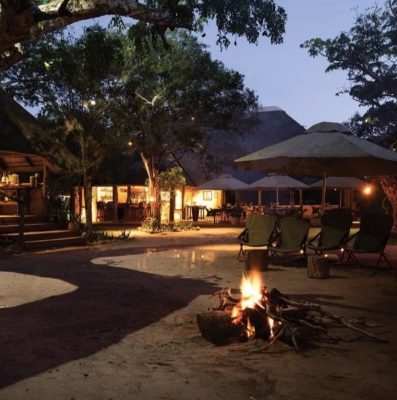 Afternoons in Tembe tend to slow right down. Birdlife becomes the main focus, with kingfishers, herons and birds of prey moving across the wetlands, before heading out for sundowners near the swamp.
Watching the sky shift from gold to deep orange while Venus and Mars begin to appear is one of those classic safari moments that doesn’t really need dressing up.
That sense of space is what ultimately defines Tembe. On most drives we didn’t encounter another vehicle, a rarity in many Big Five reserves. There are no queues at sightings and no rush from one attraction to the next. Instead, the experience unfolds at its own pace, making it feel less like visiting the bush and more like being part of it.
The park itself is co-owned and managed by the Tembe community on ancestral land, with Ezemvelo KZN Wildlife overseeing ecological management. Tourism revenue feeds directly back into local employment and development, and the lodge is one of the biggest employers in the area, with staff drawn from surrounding communities.
Tembe is also shaped by people whose work reaches far beyond tourism. Ernest Robbertse, co-owner of Tembe Elephant Park Lodge, was a deeply respected conservationist and humanitarian whose ‘Bring Water to Our People’ campaign helped install boreholes and a 10km pipeline to supply clean water across the drought-stricken Tembe region. Rather than relying on short-term water deliveries, he focused on building sustainable systems that could serve communities long after interventions ended. In partnership with organisations including the Kingsley Holgate Foundation, he helped advance long-term water security projects across the area.
Following his death, the lodge, the foundation and local community partners came together to continue that vision, working to complete and expand water infrastructure projects that still support thousands of people today. His legacy is being carried forward through ongoing initiatives that can be supported via the Kwa-Tembe Water Expansion BackaBuddy page.
Tembe is one of the more affordable Big Five safari experiences in the area. But the real value lies in something harder to measure, the chance to experience a wilderness that still feels wonderfully unhurried and authentic.
By the time we left, Tembe had settled into that rare category of places that don’t try too hard to impress. It’s not flashy or over-styled, and it doesn’t rely on constant wildlife sightings to make an impact. Instead, it quietly reminds you that some of the best safari experiences happen when nature is allowed to set the pace.
Rates start from R2760 per person per night, or R1380 per child, including accommodation, all meals and two game drives daily.
Details: tembe.co.za
mFulaWozi Wilderness
Where luxury meets legacy in the heart of Zululand
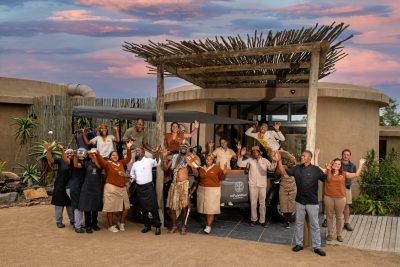
Not all safari destinations are created in the same way. Some are built around wildlife. Others around luxury. But mFulaWozi Wilderness exists because of something far rarer, a shared vision between local communities, traditional leaders and conservationists who believed the future of the land could benefit both people and wildlife.
Set on 16 000 hectares of pristine bushveld in the heart of Zululand, mFulaWozi borders the iconic Hluhluwe-iMfolozi Park and offers visitors an exclusive Big Five safari experience. Yet what makes this place memorable isn’t only the wildlife or the spectacular scenery. It’s the story behind it.
Arriving at mFulaWozi after our time in Tembe Elephant Park felt like stepping into a completely different world.
Where Tembe’s sand forests create an intimate, almost secretive wilderness, mFulaWozi unfolds in sweeping valleys, river systems and dramatic hillsides. The landscapes feel bigger, the views stretch further, and the terrain reveals itself slowly around every bend.
And then there is the wildlife.
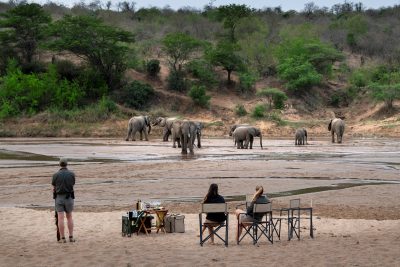 Within moments of arriving, zebra and buffalo appeared as though the bush itself was extending a welcome. Over the next two days, sightings included elephant, rhino, giraffe, warthog and countless antelope species, but it was often the smaller moments that lingered longest. Watching mist rise from the landscape at first light. Hearing birdsong echo across the river valley. Seeing elephants make their way down to drink while we watched from the lodge deck.
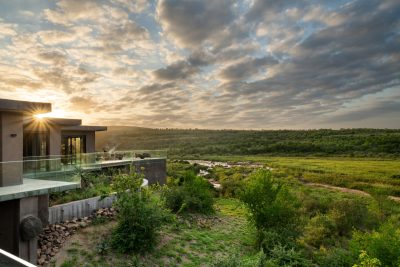 Here guests can choose between two very different luxury experiences. Biyela Lodge, where we spent our stay, is built into the hillside overlooking the White iMfolozi River floodplain. Contemporary and understated, the lodge feels almost suspended above the landscape. Private suites, many with plunge pools, look out across endless wilderness, while wildlife regularly wanders through the valley below.
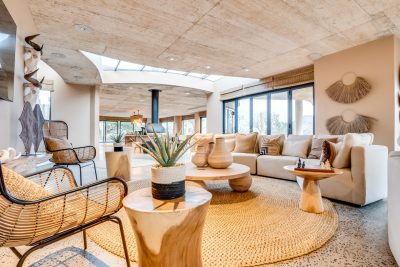
Across the reserve, Mthembu Lodge offers a more family-focused experience along the riverbanks. During our visit, we enjoyed lunch there overlooking the river, a spread that perfectly reflected the warmth, culinary creativity and generosity that runs throughout the reserve. Thoughtfully prepared, generous and entirely unpretentious, it felt less like lodge dining and more like being welcomed into the home of someone who really knows their way around a kitchen.
What stood out at both lodges wasn’t only the luxury. It was the people. Spending time with owners Barry and Sonya Theunissen added another layer to the experience. Barry first floated the idea of a game reserve while working on a housing project for the Mthembu community more than a decade ago. What began as a conversation with local traditional leaders eventually grew into a conservation initiative that has become one of KwaZulu-Natal’s most inspiring community partnerships.
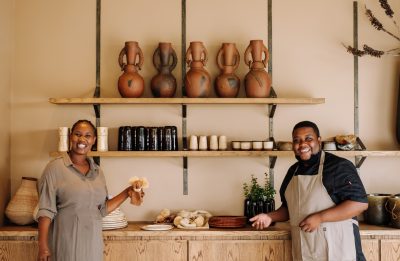 Today, mFulaWozi works alongside local communities to create employment, develop skills and generate sustainable opportunities through tourism and conservation. Many staff members were involved in building the lodges themselves, learning valuable skills that continue to benefit them long after construction ended. It is a reminder that tourism, when done thoughtfully, can create far-reaching impact.
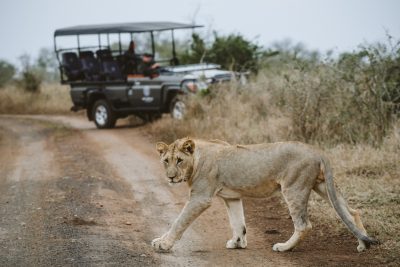 Of course, there were unforgettable game drives too. One early morning began with coffee and rusks before sunrise and quickly turned into one of those safari mornings that reminds you why people keep coming back to the bush. Predator tracks crisscrossed the roads. A wild dog crossed paths with two lioness sisters. Later, after a river crossing and some determined tracking, we found two male lions resting in the Winter sunshine, occasionally lifting their heads to acknowledge our presence before settling back into the grass.
Another evening ended with rhino and leopard sightings after dark, illuminated only by torchlight, while a spotted eagle owl waited patiently on the road ahead.
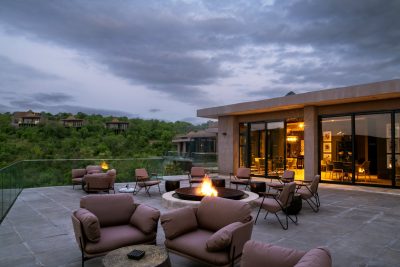 Yet for all the remarkable wildlife encounters, what stayed with us most was the feeling of the place itself. The luxury is undeniable, among the finest we’ve experienced in the bush. But it never feels disconnected from its surroundings. There is heart here. A genuine connection to the land, its people and its future.
And perhaps that’s what makes mFulaWozi so special. It’s not simply a luxury safari destination. It’s a reminder that conservation, community and tourism can thrive together.
Rates start from R8850 per person sharing at Mthembu Lodge and R10000 per person sharing at Biyela Lodge, including accommodation, all meals, selected beverages and two guided game drives daily. A conservation levy of R450 per person per night applies. Details: mfulawoziwilderness.com