For 15 years, Francie Jermyn has lived her life around a dialysis machine. Yet despite everything she has endured, she continues to choose joy, hold on to hope and believe that somewhere, someone could change her life forever.
Every Monday, Tuesday, Thursday and Saturday, while most of Hillcrest is still asleep, Francie Jermyn’s day begins long before sunrise. Her alarm sounds at 5am. Soon afterwards, the dialysis nurse arrives at the home she shares with her husband and best friend, Gareth. The machine is prepared. Two large needles are inserted into her arm. For the next four hours, blood leaves her body, and passes through a dialysis machine that performs the work her own kidneys no longer can.
Then begins the recovery before life resumes, only for the process to start again a day later.
“I often say dialysis sucks the life out of you while keeping you alive,” Francie says. “It is a part-time treatment for a full-time illness.”
It is a reality she has lived with for the past 15 years. But ask Francie who she is and kidney disease is not the answer you’ll hear.
“My illness has never been the thing that defines me.”
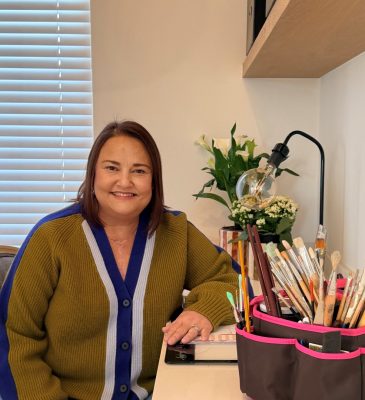
Instead, she’ll tell you about her love of creativity, beautiful interiors, cooking, gardening and spending time in her art studio. She’ll tell you about wandering through Camp Orchards or Fig Tree Farm when she needs to replenish her soul, and about the joy she finds in creating beauty from ordinary moments.
She describes herself as entrepreneurial, caring and always ready for an adventure, provided her health allows it. Before kidney disease became such a significant part of her life, she built creative businesses, decorated homes and dreamed of becoming a mother. Life looked very different then.
The first signs that something was wrong appeared while she was still in Grade 11, when recurring kidney infections became impossible to ignore. Years later, after finishing university while friends were planning careers and travelling overseas, she received the devastating news. Her kidneys were functioning at just nine percent.
Then came an extraordinary act of love. Without hesitation, Francie’s mother offered to donate one of her kidneys. “When I needed a transplant, my mom didn’t hesitate for a second,” she says. “She truly gave me life twice.”
The transplant gave Francie another chance, and she embraced it wholeheartedly. She started a successful lifestyle business, travelled, created and lived life with renewed purpose. Those 10 years remain some of her happiest.
But slowly, subtle changes began to appear. Swollen ankles, anaemia, an instinctive feeling that something wasn’t right. Then, following a severe illness, her transplanted kidney began to fail.
In 2011, she returned to dialysis. At first it was once a week. Today, it is four mornings a week, every single week of the year.
People often imagine dialysis as simply sitting beside a machine, but Francie says the treatment reaches into every corner of life. There are relentless fluid restrictions, endless blood tests, dietary limitations, exhaustion, nausea, headaches, muscle pain and sleepless nights. Every sip of water requires thought. Favourite foods become memories. Holidays require meticulous planning around dialysis units, often in another country, at significant cost. “It changes almost every decision you make,” she says.
Perhaps most difficult is that many of the challenges are invisible.
“People don’t see the body aches, overwhelming fatigue or sleepless nights. They don’t see the emotional weight of living with uncertainty.”
Nor do they always understand the toll kidney disease takes on the rest of the body. Healthy kidneys regulate far more than most people realise. When they fail, the heart works harder, making cardiovascular disease one of the greatest risks for dialysis patients.
Francie knows that reality all too well. In 2018, ophthalmic shingles spread to her brain. She spent two weeks in a coma and another five weeks on a ventilator. Her family were told to prepare for the worst. Instead, she woke up, learned to walk and to talk again.
Then, in 2024, she suffered a heart attack and underwent a double bypass.
“Faith over fear,” she says simply. “Those three words have carried me through every surgery, every setback, every miracle and every new beginning.”
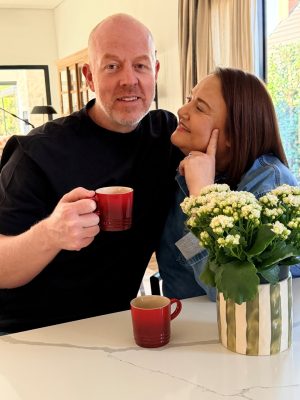
Throughout it all, one constant has never left her side. Her husband, Gareth.
“Gareth is love personified,” she says.
Knowing how exhausting hospital-based dialysis had become, Gareth created a dialysis room in their home so she could receive treatment in familiar surroundings. But his greatest gift has been something less tangible.
“He has never defined me by my illness,” Francie says. “He encourages me to keep living, to keep dreaming and to keep finding joy in life. He has protected my independence without ever making me feel alone.”
When ICU psychosis after her bypass surgery left her struggling to trust her own mind, Gareth patiently helped her rebuild her confidence, gently reminding her of what was real until she found herself again.
His support, together with the unwavering love of her family and her faith, has become the foundation beneath every difficult season.
Despite everything she has endured, Francie refuses to allow illness to have the final word.
“Joy isn’t the absence of suffering,” she says. “Joy is choosing to see beauty, purpose and hope in the middle of it.”
Today, hope has a very specific shape, as Francie urgently needs another kidney. Because she has already received one transplant and has spent many years on dialysis, finding a compatible donor is more complex. Her blood group is O positive, meaning she can only receive a kidney from someone with O positive or O negative blood. Even then, doctors perform specialised crossmatching to ensure her immune system won’t reject the donated kidney.
“A little like finding the right key for a very particular lock,” she explains.
A living donor offers the best chance of long-term success, with kidneys that often begin working sooner and last longer than those from deceased donors.
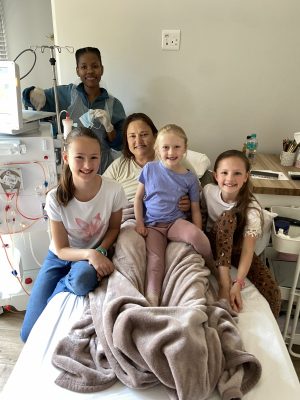
If that day comes, Francie says it won’t simply mean another chance at life. It will be freedom. Freedom to walk into her kitchen and enjoy foods she’s had to avoid for years – eating a banana, avocado or tomato without calculating potassium levels. Freedom to book a flight and spend precious time with her nieces and nephew overseas, without dialysis dictating every detail of the journey. Freedom to travel through the south of France, ride motorcycles across America with Gareth, return to recreational sport, spend more time outdoors and trust her body again.
After years of protecting the dialysis graft in her right arm, she even dreams of something as wonderfully ordinary as using both arms without thinking about it. But the freedom she longs for most is beautifully simple.
“I long to wake up one morning without dialysis being the first thing I have to think about. That kind of freedom feels almost impossible to imagine, but it’s the hope I hold onto every single day.”
“Receiving another kidney wouldn’t simply give me more years to live,” she says. “It would give me more life in those years.”
As South Africa marks Organ Donor Awareness Month, Francie’s story is a reminder that behind every name on a transplant waiting list is a life waiting to be fully lived. They are waiting for family milestones, spontaneous adventures, ordinary breakfasts and quiet mornings that begin without the constant reminder of illness.
Somewhere, perhaps without even realising it, there may be someone with the power to give Francie that freedom. Until then, she will continue to rise before dawn every second day, continue choosing joy over despair, and continue believing that miracles sometimes begin with one extraordinary act of generosity.
Could you be Francie’s match?
Francie’s blood group is O positive, which means she can receive a kidney from someone with O positive or O negative blood.
Having the right blood group is only the first step. Doctors also perform a crossmatch test to ensure the recipient’s immune system will accept the donated kidney. Because Francie has previously received a transplant and has spent many years on dialysis, she has developed antibodies, making it more challenging to find a compatible donor. Even so, successful matches are found every year, offering hope to patients waiting for a second chance at enjoying life to the fullest.
Not a match? You may still be able to help
South Africa is developing a Kidney Paired Donation Programme, sometimes called a kidney exchange programme. If a willing donor isn’t compatible with their intended recipient, transplant teams may be able to pair them with another donor-recipient combination, allowing two patients to receive life-saving transplants through a donor ‘swap’.
Could you change a life?
Did you know?
- More than 4 000 South Africans are currently waiting for life-saving organ and cornea transplants.
- One organ donor can save up to seven lives and transform many more through tissue donation.
- Kidneys are among the organs most urgently needed.
- Living kidney donation is possible because most people can live healthy, active lives with one kidney.
To learn more about organ and tissue donation, or to register as a donor, visit hero777.co.za or odf.org.za.