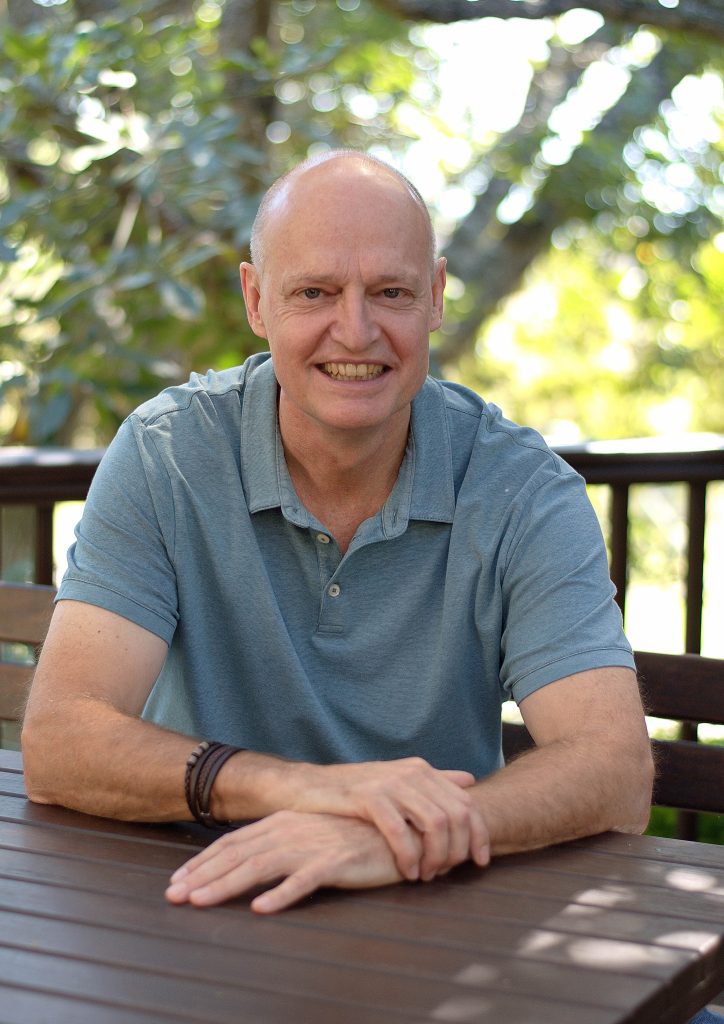
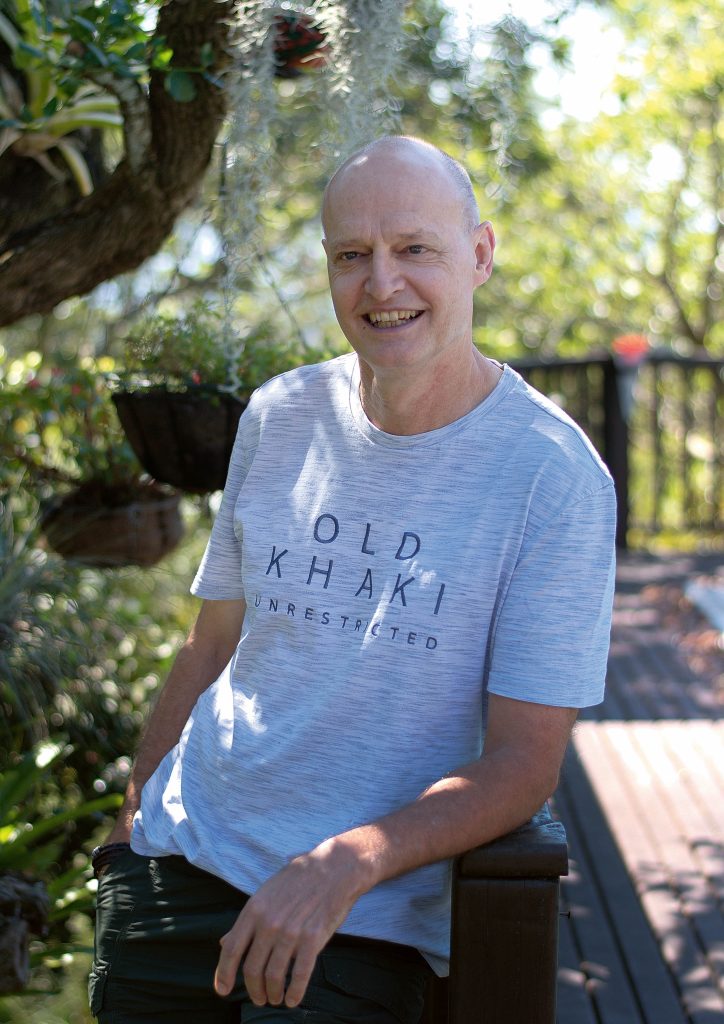
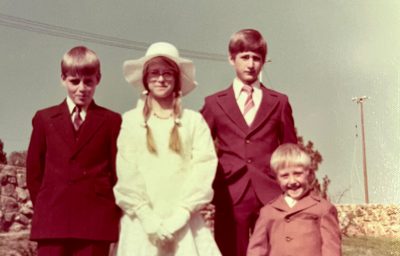
Pieter’s upbringing was idyllic. Born in Kroonstad in 1963 to adoring parents, Pieter’s memories are of living the dream. “Then life changed and formal education started,” he smiles. “We moved to Pretoria [Pieter has two older siblings] and school became my whole world. I was academically very lazy, which infuriated my parents to no end. Lots of friends and fun and just being young and confused about my future and my place in the universe,” he laughs. “When my youngest brother was born, I became a father for the first time. We had an incredibly special bond. These were beautiful years without any real worries. We were middle-class people, and occasionally my dad had to sell our house to keep us afloat, but mostly we were OK.”
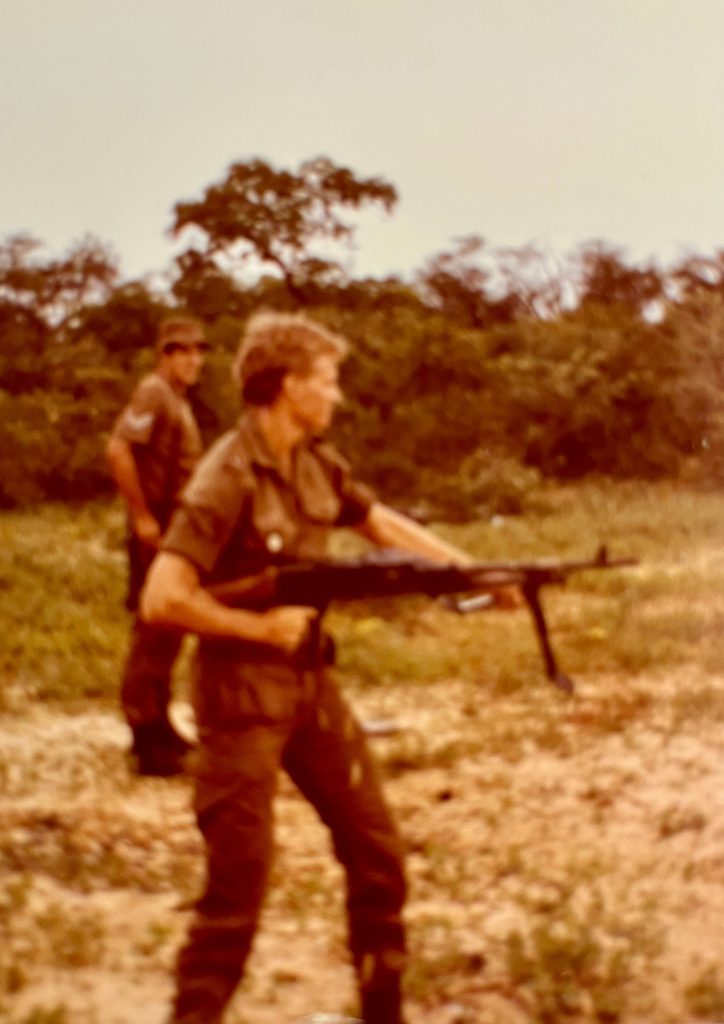
With a lot of prodding, Pieter managed to finish matric with a somewhat poor academic performance. Choosing medicine as a career was not something Pieter would ever have contemplated if it weren’t for the inspirational effect of not really knowing what he wanted to do. His application to study medicine was rejected due to his academic record, so he decided to do his two years of compulsory military duties instead. “What followed was lots of dust, sweating and swearing, combined with a lot of running, shooting, loud explosions, fear of dying and longing for home.”
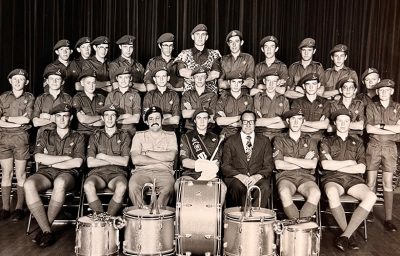
Pieter’s memories of this part of his life include some very disturbing events and some very challenging times. “All the fear and how to cope under pressure has a way of changing you, and I was no exception,” he adds.
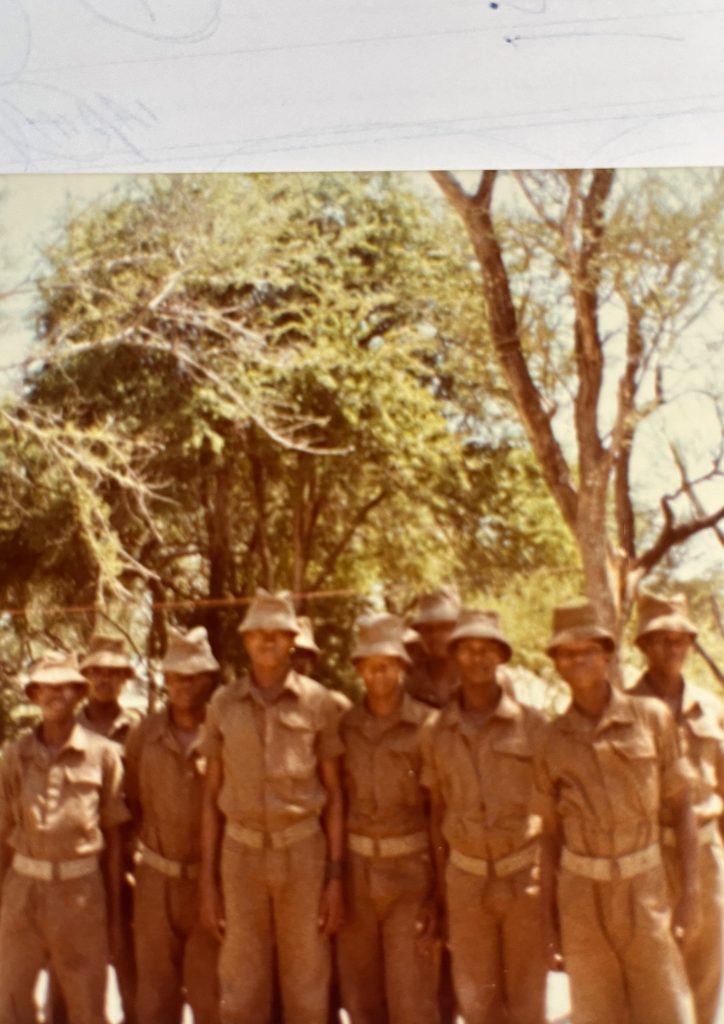
“My Bushman platoon were my first black friends, and they saved my life more than once. We were brothers-in-arms and depended on one another for our survival. They taught me how to track, how to hide and how to build a shelter for the night. They laughed
with me and cried with me. We experienced harrowing things involving war and all its ugliness. I learnt to pray under threat of death, and I learnt that politicians are a lying, deceiving lot. Up until then, I had no real political ideology. All I knew was that there was a worldwide battle going on between communism and capitalism, and by virtue of my birth, I had ended up on the capitalist side.”
Eventually all of this ended, and Pieter reapplied for admission to med school. Those days having been a lieutenant and being part of a fighting unit in the SADF were seen as a sign of at least some degree of grit, and with these bonus points Pieter was selected for medical studies. “To my amazement, I passed my first year at Tuks with a distinction,” he says. “It dawned on me that I might actually be able to make it! Commune life was wild and wonderful, but between the partying and swotting like a madman when needed, time flew by, and eventually I was a young, qualified doctor.”
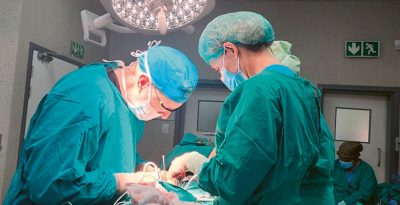
Working as a doctor in a public hospital is very similar to combat, Pieter explains, with lots of sights, sounds, smells, fear and desperation, and an all-pervasive sense of sadness. “I loved it, and realised I could do it well and make a huge difference in people’s lives,” he says. “The labour ward really overwhelms most med students when they enter it for the first time, but I thrived there despite the mind-numbing hours and the total physical exhaustion that comes from being on call for 36 hours.” Pieter got better and better at managing a busy labour unit, feeling at home in the gynaecology outpatients as well as doing theatre work. “Surgery was very challenging,” he adds, “but as time went on, I
realised I had steady hands and could perform difficult procedures exceptionally well. Specialising was just the next logical step, and I took to it like a duck to water.”
Pieter met his wife Karen in the busy labour ward in Kalafong Hospital, and says the minute he saw her, he knew they should get married and have children together. “It was a stormy affair, and after some pushing and shoving, we eventually settled down and realised we were meant to write our story together.” In 1995, after having graduated as a gynaecologist and Karen as a general practitioner, they decided to open a private consulting service in Nelspruit. “Karen and I worked like demons in those first few years,” says Pieter. “Permanently on call with lots of after-hours and weekend emergencies made for a stressful life, and it certainly took its toll on both of us. Somehow we managed to hold on and build something, including a home and a family with three boys.”
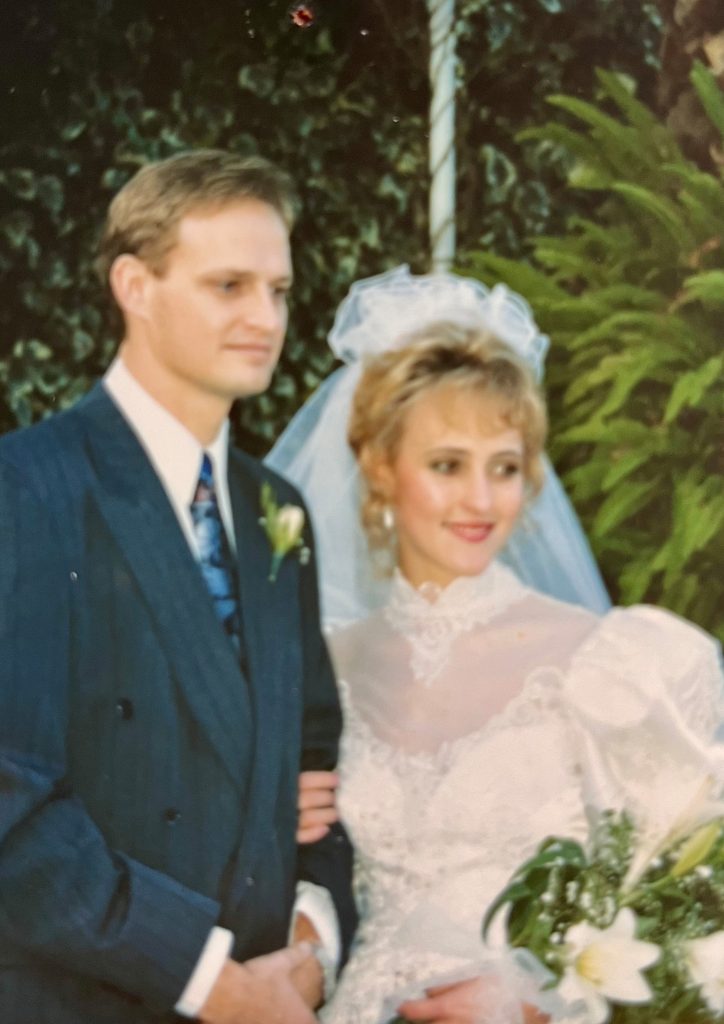
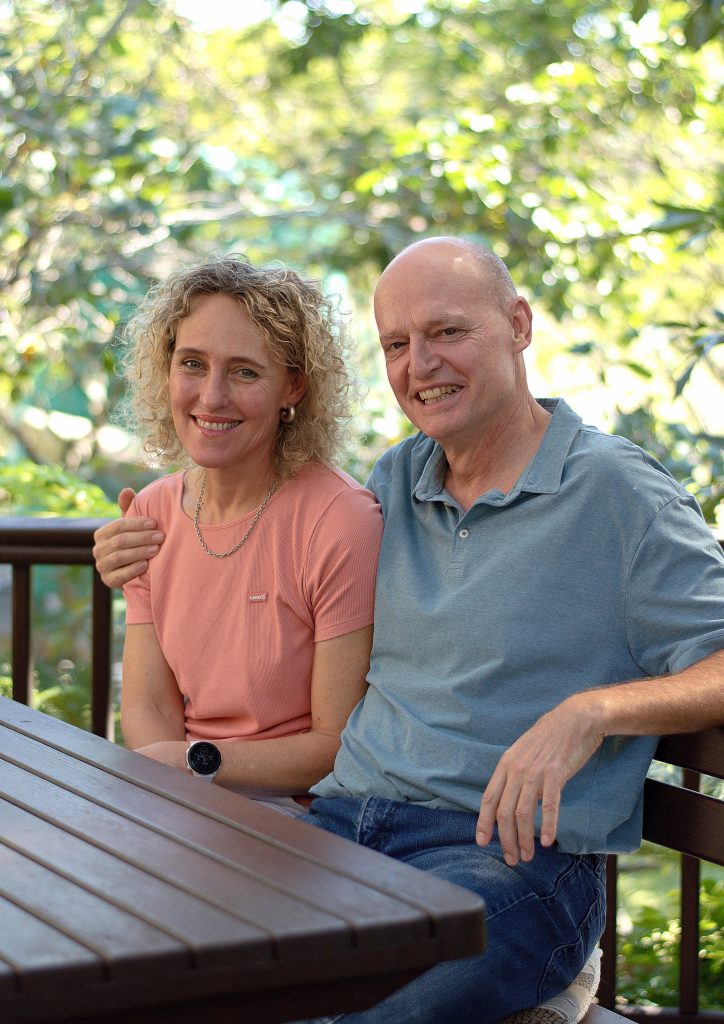
The birth of his sons is still the most significant event to happen in Pieter’s life up to now. His father died from advanced pancreatic cancer in 2000, which hit Pieter hard. “I had loved him more than I can express in words,” he says. “This disease and my total defencelessness and inability to help my dad left deep wounds. Things fell apart after he eventually died. I couldn’t deal with the psychological anguish and felt totally alone and isolated by intense grief. Somehow, with the love of my wife and some very special friends, I started to breathe again. I developed an intense desire to have children of my own.”
Unfortunately, unknown to the couple, more pain was to come. “We lost our baby girl due to a major congenital malformation,” Pieter explains. “The excitement of new life turned into sadness when, after having done an ultrasound to spy on our little girl, I realised with utter clarity that she was severely malformed. I experienced utter sadness again and started the difficult process of helping my Karen to get through the process of ending this cherished pregnancy. I felt proud and empowered by the fact that I could do her medical care myself. We sat there in that labour room holding our child and crying our hearts out. In those moments I loved my wife with an intensity and honesty that could only be described as supernatural.”
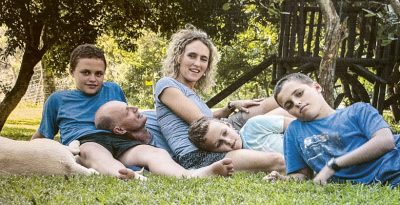
Soon after, to their absolute joy, the Steyns were blessed with twins. “Yippee!” laughs Pieter. “We were over the moon. When I delivered them by caesarean section at 37 weeks, it was magical. Holding the first one choked me up so badly that I had to remind myself there’s another one in there, and that I am also busy doing surgery on my wife! Jean and Markus Steyn were born four years after my father had died, and with all my heart I wished he could see them and hold them.” Three years later, the Steyns again became proud parents, this time of Simon.
“Another miracle,” says Pieter, “and life could not be more complicated and challenging, or more beautiful. I love being a father.”
Being a gynae, on the other hand, isn’t as easy. It means constant and immense pressure to not make any mistakes, especially when dealing with high-risk situations. “The potential for litigation is always hanging over your head,” Pieter says, “plus lots of emergency and after-hours work, often late at night or in the early hours of the morning. This can be really taxing, and people deal with this kind of stress in different ways. My preferred coping mechanism was to become quiet and short-tempered. I really always tried my best to care well for those who trusted in me, but I know that I also often fell short. I have absolutely no regrets about my chosen career. Helping my patients to have their babies safely was a privilege.”
Now, after almost 30 years of practice, Pieter was forced to make some radical changes. None of us are immune to death and disability, and after the Covid pandemic, he started experiencing strange symptoms, which eventually led to a diagnosis of Parkinson’s disease. “What a bummer. What a lucky break,” he says. “I couldn’t go on with business as usual, and I closed my practice. This episode in our lives once again changed everything forever. The only constant thing is change, and I will tackle this new chapter with enthusiasm and use it as an opportunity to discover new things and ideas. ”
The journey ahead is an adventure, full of all the things Pieter didn’t get to do when he was rushing around delivering babies. He and Karen take us on a walk around their beautiful garden, stopping next to Pieter’s favourite tree, a boesmansgif, which is adorned with orchids. “Isn’t this lovely? I find plants very calming. I always like to remind myself – and anyone else who wants to listen – the only thing we have to fear is fear itself.”