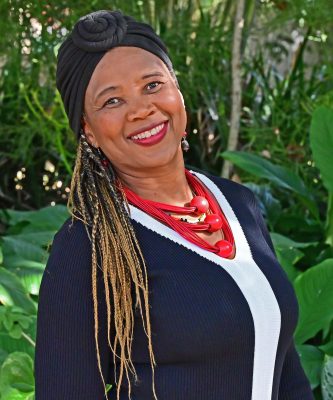
Speech-language therapist, audiologist and author Dr Thandeka Mdlalo is passionate about her work – and wants others to know just how important an understanding of diversity is in our country.
A trailblazer in the fields of speech-language therapy and audiology, Thandeka was the first black African speech-language pathologist to earn a doctorate in KwaZulu-Natal. But her work is about so much more than accolades and studies – it’s about making a positive impact in children’s lives. Her work as a speech-language therapist, she says, is rooted in the principle of MAD—Making A Difference —reflecting her passion for accessibility and equality in speech and language therapy for all communities, especially those historically disadvantaged.
BREAKING BARRIERS
Thandeka grew up in Gqeberha and, having lived in KZN for the last 30 years, has experienced the complexities of language first-hand. She is something of a pioneer in her field, focussing on the unique challenges faced by South Africa’s culturally and linguistically diverse (CLD) society.
 In her work as a speech-language therapist, Thandeka encounters numerous assessments where diversity factors are simply overlooked. Her concern surrounding this prompted her to write “Diversity: My Call to Action.” In her book, she discusses the significant impact of ignoring cultural and linguistic diversity in speech and language assessments. “It has been a huge source of frustration for me because it has huge repercussions and can potentially change a child’s life trajectory,” she explains, “This makes it a justice issue for me.”
Writing the book was a deeply personal and cathartic experience. It allowed her to express herself authentically and address emotional wounds, particularly in the chapter about her mother, a dedicated nurse who developed Presenile Alzheimer’s Disease. Her condition initially manifested as typical age-related memory loss but had unique aspects such as forgetting colours, getting lost, and not recognising basic objects or close family members. “As a speech and hearing therapy student at the time, my studies in neurology helped me understand her symptoms better and help my family in interpreting complex medical terms,” Thandeka explains. “This knowledge was crucial in understanding her socially unacceptable behaviours and language issues, like being exhibitionistic or screaming and shouting, which are described as pragmatically inappropriate in our profession.” Her mother struggled with the disease for 10 years before she passed away. “I included her story in my book to highlight the importance of a multidisciplinary approach that considers cultural and linguistic differences in the assessment and management of such conditions.” She hopes this personal experience, along with others that she shares in the book, will educate, support, and empower readers.
A PLATFORM FOR CHANGE
Thandeka also founded The Diversity Centre, an online resource, which aims to tackle the critical issue of misdiagnosis and lack of diagnosis in South Africa. This misdiagnosis often stems from a failure to distinguish between speech and language disorders and differences. The centre strives to provide support for these differences, ensuring that diverse cultural and linguistic backgrounds are considered in assessments and interventions.
 EMPOWERING THROUGH KNOWLEDGE
Thandeka stresses the importance of empowering oneself with knowledge to understand differences rather than labelling them as disorders. She believes that diversity means recognising that children might struggle with English in school because it is not their home language, rather than having a speech, language, processing or hearing problem. “It’s important for us to empower ourselves with knowledge to understand these differences and not label, judge, and portray them as disorders because that can have significant negative consequences,” she says. To help pave the way for a more inclusive and understanding approach to speech and language, Thandeka runs regular workshops for teachers and therapists around KZN. “It’s important that this information is accessible,” she says. “We live in a rainbow nation and the issues surrounding diversity are key.”
Details: www.thediversitycentre.com; 072 371 7100; thandekamd@gmail.com