Veteran teacher and author Robin Ellis is transforming creative writing in schools through immersive storytelling, literature studies and workshops that help learners discover confidence, imagination and their own authorial voice.
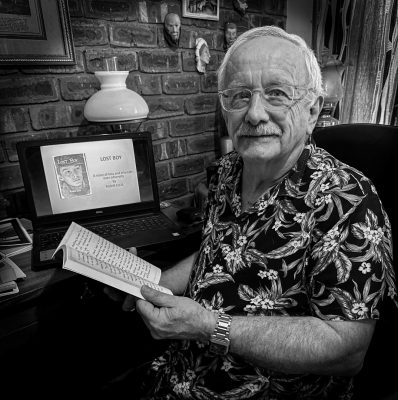
For veteran educator and author Robin Ellis, storytelling has never simply been about books. It has always been about unlocking something in young minds. After a lifetime in the classroom teaching English and History, Robin has carried his passion for language far beyond school walls. Today, his work continues to shape how children across KwaZulu-Natal experience creative writing, not as a daunting exercise, but as a space for imagination, discovery and voice.
“I developed a love for English literature while I was still at school,” he reflects. “History came from my mother’s influence, particularly English history. It stayed with me.”
That early spark would eventually grow into a career spent inspiring others to find their own voices, first as a teacher, and later as an author whose books now form part of school literature studies.
Robin’s journey as a writer began quietly, with a manuscript that sat untouched for years. That changed one day when his learners asked him to read it aloud.
“The fact that they wanted to hear more every day was a great inspiration,” he says. “That’s when I realised the story had to be shared.”
 The result was In the Shadow of the Dragon, a book set in the Drakensberg mountains, following three boys from different backgrounds on a shared adventure. What began as a classroom story eventually became a self-published book, later supported by a teacher-designed workbook that transformed it into a full literature study unit.
That experience set the tone for everything that followed, books created not just for reading, but for teaching.
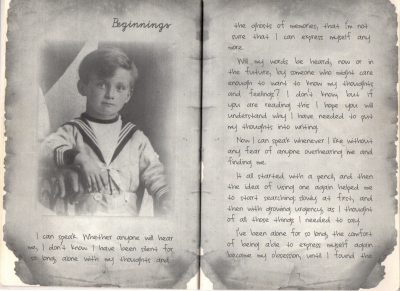
His second book, Lost Boy, marked a shift into deeper historical territory. Set in the final days of World War II, the story follows a Jewish boy alone in the ruins of Berlin, documenting his experiences in a handwritten journal. Photographs from Robin’s own family albums add an additional layer of realism to the narrative.
 “I wanted readers to feel empathy,” he explains. “Not just for the character, but for all the children who experience displacement and conflict today.”
The response from learners has been striking. Many question whether the story is real, a reaction Robin sees as evidence of its emotional authenticity.
“If they ask that, I know the story has connected,” he says. “It means they believe in the character.”
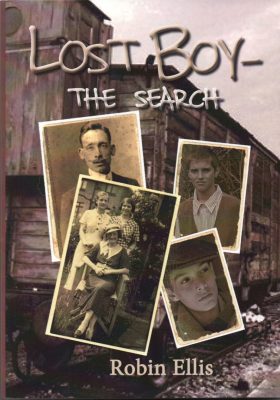
A sequel, Lost Boy – The Search, written in just 18 days, continued Daniel’s journey as he searches for traces of his family. It quickly sold out its first print run.
While his books have found their place in schools, Robin’s wider impact lies in what he has built around them. He now runs creative writing workshops for Grades 4 to 7, designed to develop skills progressively, from simple sequencing in younger grades to advanced creative thinking in older learners.
“Creative writing needs to be introduced in stages,” he explains. “You cannot expect learners to produce something complex without first giving them the tools.”
His approach is practical, structured and deliberately accessible, something that has earned strong feedback from teachers who have seen immediate improvements in learner writing. One of his most ambitious tools is a year-long workbook titled The Magazine, which guides learners through analysing publications and creating their own magazine-style writing.
“It teaches them that writing exists in many forms,” he says. “And that they can be authors in all of them.”
Perhaps the most powerful thread through Robin’s work is encouragement, a consistent message that writing belongs to everyone. His school presentations, You Too Can Be an Author, aim to dismantle the fear around writing and replace it with possibility.
“What I want learners to understand is that every time they write, they are authors,” he says.
That message appears to resonate. Even traditionally disengaged learners, including Grade 9 groups often considered difficult to motivate, have responded with enthusiasm and unexpectedly strong writing.
“The standard of writing surprised even me,” he admits. “And the teachers said it continued afterwards.”
Between his three books, Robin has now sold more than 1 500 copies, with growing use in schools across the province. His work has also been recognised by institutions such as the Durban Holocaust Museum, which has added his books to its library collection.
For Robin, the validation lies not in numbers, but in meaning.
“I watched a Holocaust documentary once and heard a survivor describe his childhood,” he recalls. “It felt like he was telling my story. That moment made me realise I had achieved what I set out to do.”
Now retired from full-time teaching, Robin continues to expand his educational reach. His latest projects include a new book exploring indoctrination and moral change, as well as spelling and creative thinking resources designed for schools.
He remains focused on one goal, helping learners see writing not as a task, but as a tool for thinking, feeling and expressing.
“If good education does one thing,” he says, “it should leave a child with a thirst and passion for improving themselves and achieving their dreams.”
Robin Ellis’s work is ideal for schools seeking South African-relevant literature, teachers wanting structured literature study resources, learners who struggle with traditional writing formats, and schools looking for engaging author talks and creative writing workshops.
Details: Contact him on 084 247 5660, robinellis.co.za, or follow him on Facebook: Teach, Care and Share.
Finding your voice
Robin shares practical insights from decades in the classroom and beyond.
What is the biggest mistake adults make when teaching creative writing? Giving a topic and expecting an immediate, fully formed creative story without guidance or input.
A simple classroom exercise to spark creativity? Build a story together as a class, sharing ideas and vocabulary around an exciting theme so learners co-create the narrative.
How can reluctant writers be encouraged? Find even the smallest idea they are willing to share, then build confidence from there.
Why structure and freedom both matter? A simple keyword-based planning method helps learners organise ideas while still allowing creative freedom, and it also supports paragraphing.
One message every child should hear about their writing? You have something worthwhile to share.