In honour of Youth Month, we shine a light on Alexandra Lutz, a Stellenbosch student who calls Alverstone home, and is helping reshape education in South Africa.
At just 14 years old, while most teenagers were navigating the uncertainty of lockdown life, Alexandra Lutz was quietly building something that would grow far beyond her bedroom. What began as a simple idea, sharing learning content with a few young minds in need, has since evolved into Milani Education, a free online learning platform and non-profit organisation supporting thousands of high school learners across South Africa.
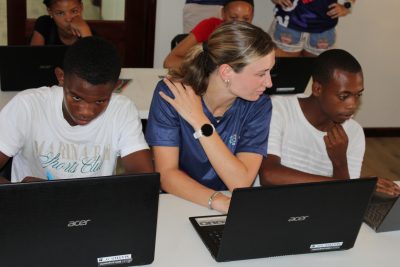 Today, at 20, Alexandra is studying Data Science at Stellenbosch University, with a focus on Behavioural Economics, but her work in education has already earned national recognition, including a Young Mandela nomination by News24 and a University Student Innovation Award at the Cape Chamber of Commerce Academic Innovation Awards
Yet for Alexandra, the motivation has never been about accolades. “It started with a simple mind map,” she says. “I saw a problem and thought, there must be a way to fix it using what we already have.”
The turning point came during the COVID-19 lockdown in 2020, when Alexandra, then a Grade 9 learner at St John’s D.S.G. in Pietermaritzburg, noticed a growing gap in access to education. While her own transition to online learning was relatively smooth, she quickly realised this was not the case for many others.
“My English teacher first pointed it out to me,” she says. “I realised how many learners were being left behind without resources. That was the moment it really settled in.”
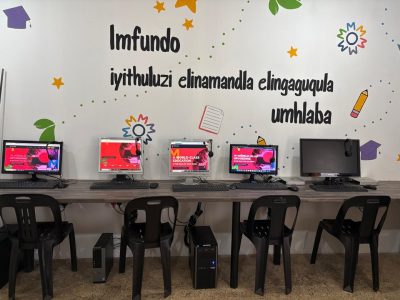 From there, she began sharing learning materials with a small group of learners from the Imbeleko Foundation in rural KwaZulu-Natal, testing what would later become the foundation of Milani Education. What followed was a steady process of feedback, refinement and growth, driven by a simple but powerful question: what do learners actually need?
What began with a handful of students quickly grew into something more structured, supported by early collaborators, seed funding and a small group of student volunteers, affectionately known as the ‘Milani Army’.
By 2023, Milani Education officially launched as a free, CAPS-aligned digital learning platform for South African high school learners. Today, it offers more than 1,000 video lessons across core subjects, designed to be accessible and practical, particularly in low-connectivity environments.
But Alexandra is quick to shift the focus away from numbers.
“Success is not about scale,” she says. “It’s about seeing learners engage with something and understand it in a way they couldn’t before.”
The journey has not been without setbacks. “There have been rejections from the beginning,” she says. “But each one helped us refine what we were building.”
One of the most defining moments came with Milani’s first major corporate partnership, which Alexandra describes as surreal.
“That was when I realised this was no longer just an idea. It was something real, something that could genuinely impact lives.”
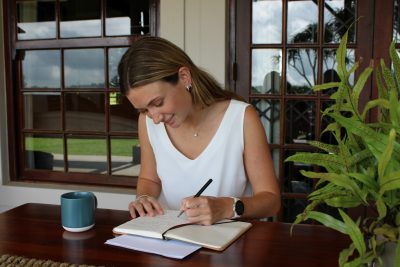 Balancing university life with leading a growing organisation has also required adaptation.
“I’ve had to learn to delegate and trust my team,” she says. “Milani often feels like a passion project, but it also demands discipline.”
At the heart of Milani is a small but committed team. Alexandra’s role focuses on vision and partnerships, while general manager Jaimie Hugo oversees daily operations and content development.
Her mother manages compliance and finance, while a broader network of teachers and education specialists curate content to ensure quality and CAPS alignment
Partnerships have also played a key role in expanding access, including initiatives with organisations such as Pebbles Project and City Hill Church, which have helped bring learning into underserved communities.
One such initiative in Embo, outside Hillcrest, has transformed a local space into a structured learning centre, giving learners access to digital resources and support.
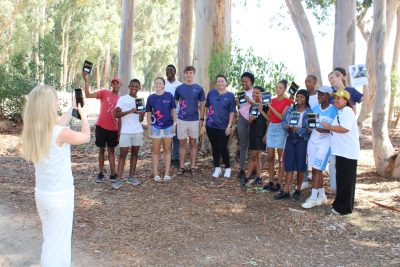 For Alexandra, the mission is clear: education should not depend on geography or circumstance.
“Educational equality means every child has access to the same quality of learning, no matter where they are or what their background is,” she says.
She believes technology, when used effectively, can help bridge that gap.
“If we can combine access, connectivity and quality content, we can genuinely change outcomes for young people.”
As Milani continues to grow, Alexandra’s vision remains focused on long-term impact rather than immediate scale. In the next few years, she hopes to expand subject offerings, introduce more language accessibility and integrate emerging technologies to support personalised learning.
But her underlying belief remains unchanged.
“If I can change even one learner’s future, that is success to me.”
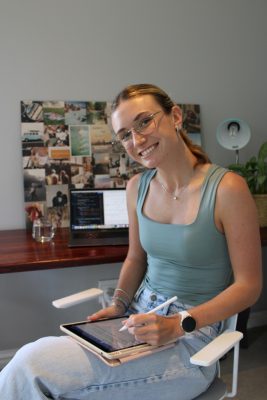 You’re not too young to start
Alexandra’s top tips on starting small, staying consistent and making a meaningful impact.
Start with what you see around you
- You do not need a big idea to begin, small, local problems are often the most meaningful place to start.
You will never feel fully ready
- Readiness is not the starting point, commitment is. You learn as you go.
Rejection is part of the process
- Setbacks are not failure, they are direction. Even one yes can keep you going.
Persistence matters more than resources
- You do not need experience or funding to begin, consistency is what builds momentum.
Impact starts with one person
- If you can improve one life, you are already making a difference.