Durbanite Michelle Mathysen has turned her lifelong love of water into a mission to help children overcome their fears, learn a vital life skill and discover the joy of swimming, with a children’s book to make those first lessons less daunting.
For Michelle Mathysen, some of her happiest childhood memories involve water. Whether swimming in the sea, splashing in tidal pools or spending time in a swimming pool, she always felt at home in and around water.
Her mother first taught her to swim, introducing her to breaststroke, which remains her favourite stroke. Her father was a lifeguard in his younger years, and while one grandmother was terrified of water, another loved swimming in coastal tidal pools. Looking back, Michelle believes her family helped nurture her lifelong love of swimming.
Her own introduction to formal swimming lessons, however, was not quite so idyllic.
“I was about four years old, and I remember being thrown into the deep end and feeling quite traumatised,” she recalls.
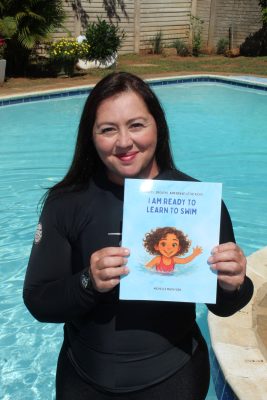 That experience has made her particularly mindful of how intimidating the water can feel to a young child. While some are eager to jump straight in, others need time, reassurance and the confidence to progress at their own pace.
After having her own children, Michelle decided to turn her passion into a career that would offer greater flexibility for family life. She completed her swimming teacher training with Swimming South Africa in the first half of 2008 and began sharing her love of water with others.
“I find swimming cathartic. While swimming, you can gather your thoughts, which makes me feel at peace,” she says. “I am incredibly blessed to spend a lot of time in an environment I love, where I get to help others find their own confidence in the water.”
One of her favourite moments is witnessing a child’s lightbulb moment, when a skill that once seemed impossible suddenly clicks into place.
“It’s beautiful to see the pride on their faces when they unlock their potential,” she says.
Michelle also enjoys the curiosity children bring to lessons. Their questions and unexpected observations have taught her patience and adaptability, reminding her that every child learns differently.
It was this understanding, along with seeing how anxious some children were before their first swimming lessons, that inspired her to write a book.
Michelle had always wanted to write children’s books but had never quite taken the leap. Watching new clients arrive for lessons, she realised that many children had little idea what to expect. Some were nervous about entering the water, while parents who had never learnt to swim themselves were sometimes unsure how to prepare them.
What if families could read a story together before that first lesson, helping children become familiar with the experience before arriving at the pool?
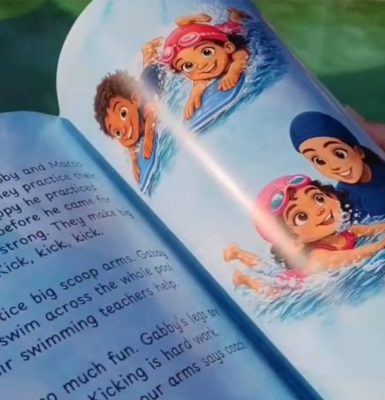 The idea became I Am Ready To Learn To Swim, which Michelle launched at the Durban International Book Fair in August 2026.
The story follows two young children preparing for swimming lessons, one nervous and apprehensive, the other enthusiastic. Through their experiences, young readers discover what to expect, from packing their swimming things and meeting their instructor to trying activities in the water.
“I created the story to show children what to expect when you start swimming lessons, in order to encourage enthusiasm and alleviate stress and fear,” she explains.
Although she had dreamed of writing since childhood, turning that dream into a published book was both exciting and daunting. Self-publishing introduced her to an unfamiliar process, but advice from a woman named Gugu helped her along the way. Having taken that first step, Michelle hopes to write more children’s books in the future.
The book has already found an audience among families preparing little ones for lessons, with some parents buying copies for younger children who have watched their older siblings swim. Grandparents have also purchased it as a gift.
Michelle hopes to reach more families through school and library visits, helping children approach their first swimming lessons with greater confidence.
Her wider goal is to help reduce childhood drownings by encouraging more children to learn this essential life skill, while ensuring that nervous beginners feel supported rather than pressured. She hopes that children who grow up confident in the water will pass that confidence on to their own children one day.
Michelle’s work was recognised with a nomination for Best Swim School in the 2026 Best of Durban Readers’ Choice Awards. Much of her support comes through word-of-mouth referrals, something she says she never takes for granted.
“There is honestly no greater compliment than being referred by word of mouth,” she says.
For Michelle, helping a child feel safe in the water and discover what they are capable of is at the heart of it all. Learning to swim is about more than reaching the other side of the pool, it is about building confidence and developing a skill that can last a lifetime.
Details: Michelle’s book costs R150 and is available directly from her at swimsweetiepie@gmail.com or on 0837091843.
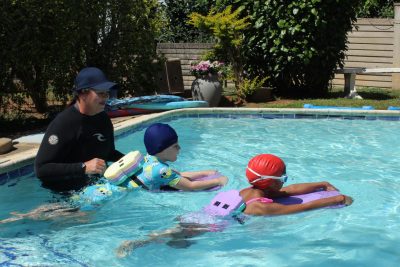
Make water safety a Summer priority
Summer means more time at swimming pools, beaches and rivers, but a few important precautions can help families enjoy the water more safely. Michelle shares her advice for parents and children.
Stay within arm’s reach. Keep young children close and actively supervise them whenever they are in or near water. Drowning can happen quickly and quietly, so put your phone away and give them your full attention.
Secure your home pool. Use a proper pool fence and secure gate, and ensure the pool is covered when not in use. Remember that no barrier replaces supervision.
Never rely on inflatables. Pool toys and inflatable devices are not substitutes for proper supervision or approved safety equipment.
Empty buckets and tubs. Empty water containers immediately after use and store them upside down, out of children’s reach.
Don’t leave older children in charge. An older sibling should not be expected to supervise a younger child in the water. Ensure a responsible adult is actively watching.
Respect the sea. Swim at beaches where lifeguards are on duty and stay between the red and yellow flags. Never turn your back on the waves, and follow lifeguards’ instructions.
Know what to do in a rip current. If caught in a rip current, stay calm, float to conserve energy and signal for help. If you are able, swim parallel to the shore to escape the current rather than fighting against it.
Never dive into unfamiliar water. Pools, rivers and dams can be shallower than they appear, with hidden rocks, logs or other hazards. Avoid diving into unknown water and be particularly cautious around rivers and dams.
Teach children to follow instructions. Children should understand pool rules, listen to lifeguards and swimming instructors, and never enter the water without permission and adult supervision.
Remember that swimming lessons are not a guarantee of safety. Learning to swim is an important life skill, but children still need close supervision and appropriate safety measures around all bodies of water.