Heritage Day is the perfect excuse to gather your favourite people, fire up the braai and put a playful twist on South African favourites.
This year, we’re taking inspiration from a trio of local creatives who know how to make a celebration special – from reimagined classics to over-the-top waffles and a table that’s almost too pretty to eat at (almost).
 THE TABLE
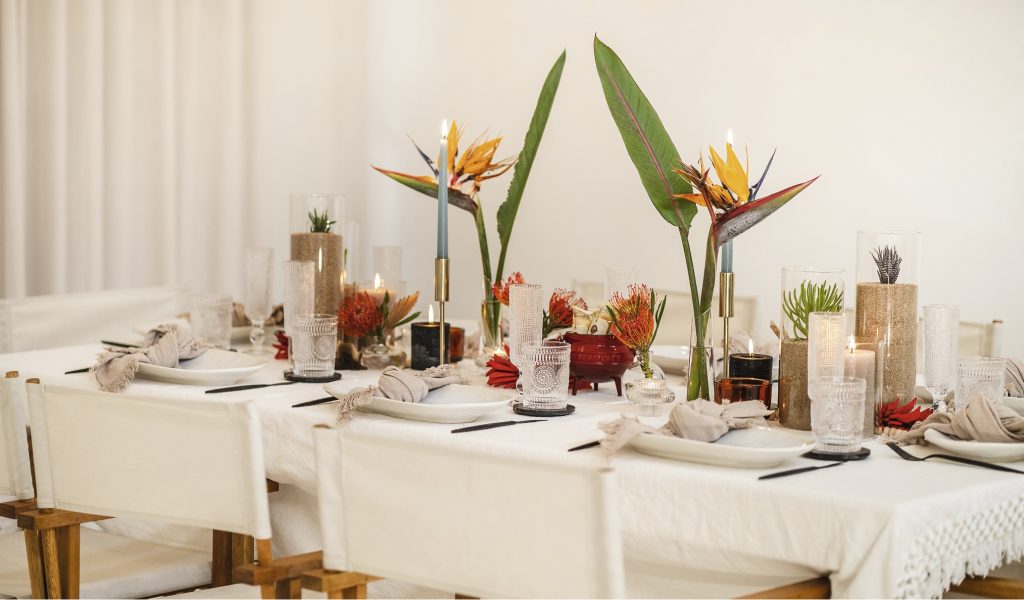
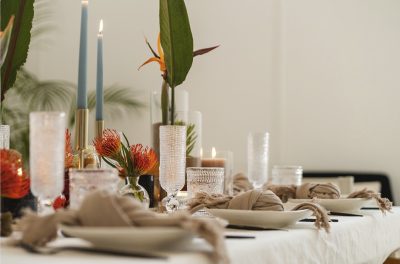
Event planner, stylist and owner of The Socialite, Raquel Thomas, put together a Heritage Day table that perfectly blends elegance and local flair. A neutral linen tablecloth and napkins create a soft, sophisticated base, while bold splashes of colour come through in vibrant strelitzia and pincushion proteas. Pops of red from mini potjie pots add a playful nod to our heritage, while textured glassware and black cutlery bring a contemporary edge. Tall taper candles in gold holders add height and warmth, and clear vases filled with sand, greenery, and dried botanicals bring a natural, earthy element that ties the whole look together.
 HOW TO CREATE THIS LOOK AT HOME
1. Start neutral – Use a plain or textured linen tablecloth and napkins to set a soft, versatile foundation.
2. Go bold with florals – Incorporate iconic South African blooms like strelitzia and pincushion proteas for instant colour and impact.
3. Add Heritage touches – Use mini potjie pots or traditional elements in unexpected ways as decor pieces.
4. Mix textures – Pair smooth glassware with sandy vases, ceramic plates, and wooden or metallic accents.
5. Play with height – Use tall candles, leafy stems, and varying vase sizes to add visual interest.
6. Keep it warm – Add candles for a soft glow and inviting atmosphere.
 THE FOOD
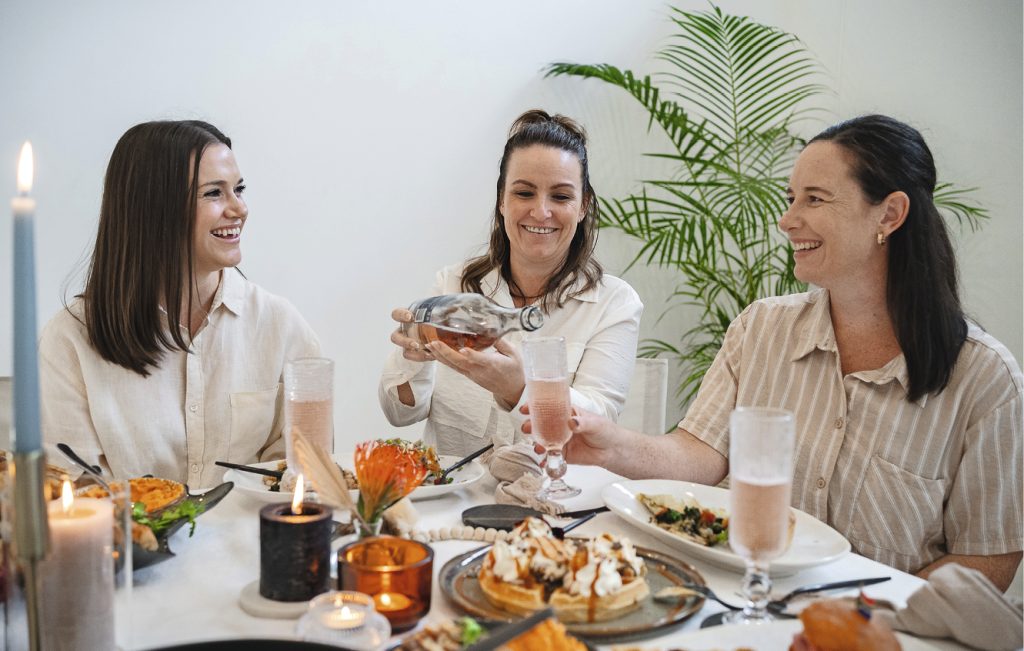
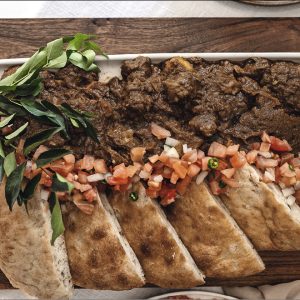
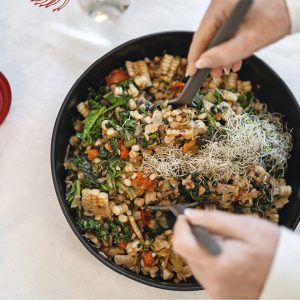
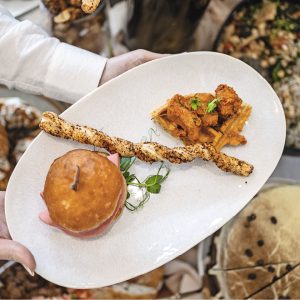
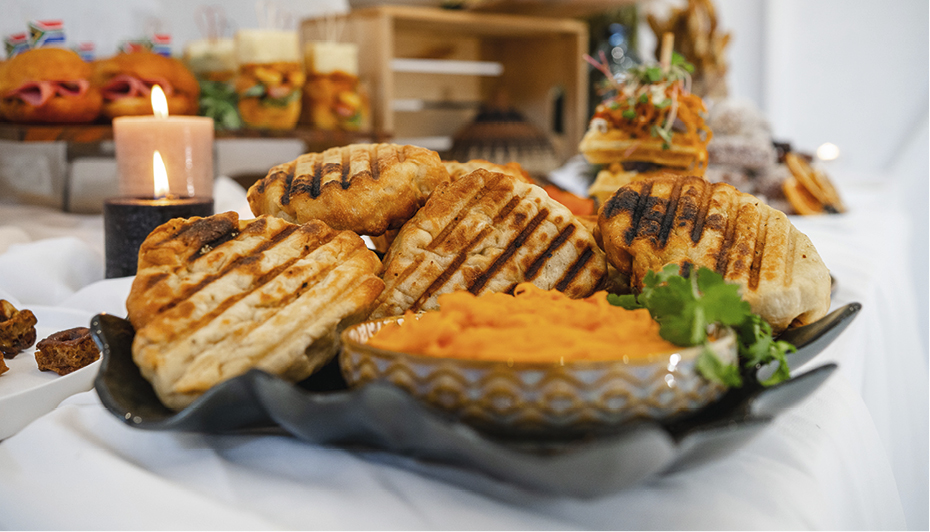
Nicky Cooper, owner of Yoli’s Bakery in Ballito, gave us a few ideas on how to give our national treasures a cheeky upgrade. In the spirit of Heritage Day, she created Cape Malay naartjie koeksisters with a fresh citrus zing, bobotie phyllo samosas, bite-sized kotas, and magwinyas transformed into ‘Zulu burgers’. She paired Durban lamb curry with samp-and-bean flatbreads, baked boeretroos coffee cake drizzled with condensed milk, and put together snacks like biltong-and-cheese pastry twists and maltabella choc-chip cookies. Even the sides got a glow-up – think umfino-inspired warm mielie salad and Castle Lager roosterkoek with ibhisto relish butter.

THE SWEET TREATS


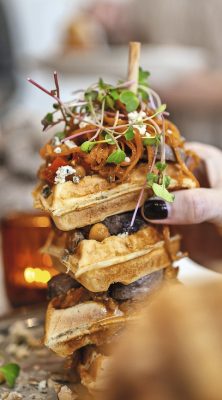
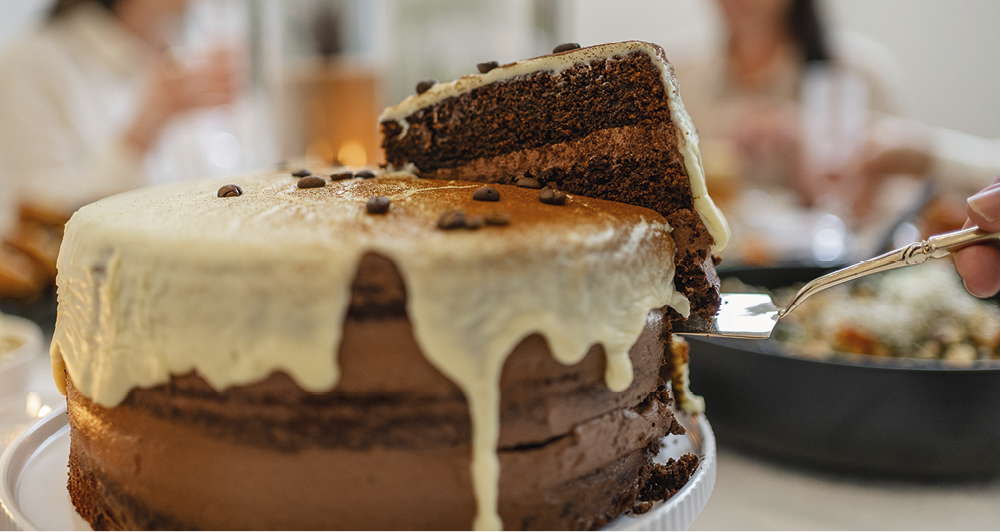
For dessert with a twist, The Waffle Society’s Clare Sykes turned our sweet traditions into waffle dreams: think peppermint crisp waffle with salted caramel sauce and cream, and peppermint semifreddo in a tennis biscuit sandwich; and a decadent, creamy milk tart waffle. For a savoury surprise, she created a blue cheese-stuffed waffle with boerewors, fried carrot sticks and chakalaka; and a potato waffle with bunny chow and a chilli-stuffed mini-waffle on top.
3 FUNDHERITAGE DAY FOOD IDEAS
To put together your own heritage-inspired spread, try these ideas…
1. BUILD-YOUR-OWN KOTA BAR
Lay out mini bread rolls and a spread of fillings (chips, polony, cheese, atchar, sauces) and let guests stack their dream kota.
2. BEER AND BRAAI BREAD
Bake roosterkoek or beer bread using your favourite local lager, then serve with flavoured butters (garlic, chilli, or ibhisto relish).
3. BILTONG CHEESE STRAWS
Make puff pastry twists with grated cheese and finely chopped biltong, echoing Nicky’s pastry snacks, and perfect for nibbling with drinks.
MAKE YOUR OWN CASTLE LAGER ROOSTERKOEK
The perfect addition to a braai, this roosterkoek takes a bit of time, but is super-simple to make.
You will need:
15g salt
1kg white bread flour, preferably unbleached and stoneground
20g instant dried yeast
15g honey
30g olive oil
660ml (2 bottles) Castle Lager Beer (room temperature)
olive oil or melted butter for basting
Instructions:
1. In a large bowl, lightly mix the salt into the flour. In a separate bowl, add the yeast, honey and olive oil to the Beer. Stir to dissolve the honey.
2. Wait for 10–15 minutes, until the yeast starts to foam.
3. Make a well in the flour, pour in the liquid, and mix until the dough comes together (it will be very tacky and sticky – don’t add more flour!)
4. Place the dough in a lightly oiled bowl, cover with a damp cloth, and place in the fridge to cold ferment for 18 to 24 hours.
5. Knock back the dough, turn it out onto a lightly floured surface and knead for 10 minutes.
6. Divide into 12 buns. Roll them into balls then press down to slightly flatten them.
7. Place on an oiled baking tray, leaving space between the buns, and allow them to double in size again.
8. Lightly baste each bun with olive oil or melted (but not hot) butter.
9. Place your grid over a moderately hot fire; you should be able to hold your hand over the grid for 10 seconds. If your grid does not have legs, use bricks or a trivet to raise it.
10. Place the roosterkoek directly on the grid. Allow the buns to cook for 5–7 minutes until a crust forms on the underside, before turning them over to cook the other side.
11. Keep turning until they are crispy, golden brown and sound hollow when you tap them with your finger.
 Details: The Socialite: @the.socialite_; Yoli’s Artisan Bakery: @yolisbakery_; The Waffle Society: @thewafflesociety.
Text: Jennifer Campbell
Photographs: Troy Bishop
Location: The Studio @ 27