Air plants are fascinating. They don’t need soil to grow in, they ‘feed’ through their leaves and their roots are simply there to anchor the plant.
The largest group are probably Tillandsia; members of the bromeliad family as can be seen from their striking spiky leaves.
They are perfectly suited as indoor plants because they need little water, and do best with bright, indirect light. That’s because they originate in tropical forest canopies, lodged in the forks for trees where they receive dappled sunlight.
What’s to like?
They are infinitely adaptable and can be displayed in many creative and unusual ways.
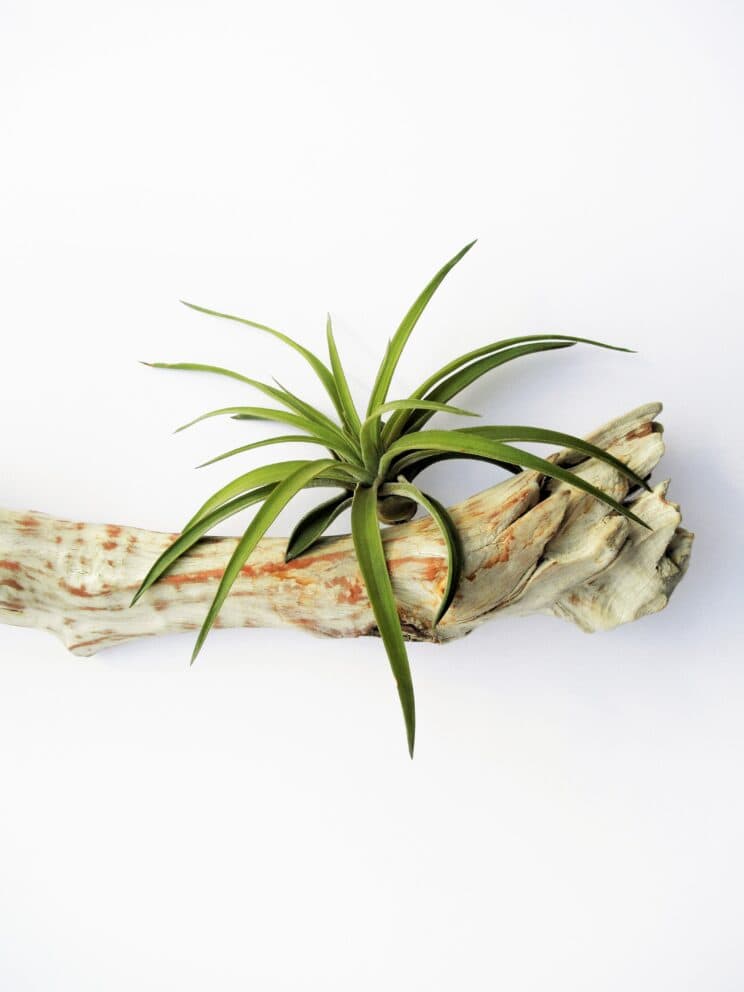
Attach them to an interesting piece of driftwood, large seashell or any natural form that catches your eye. No soil needed.
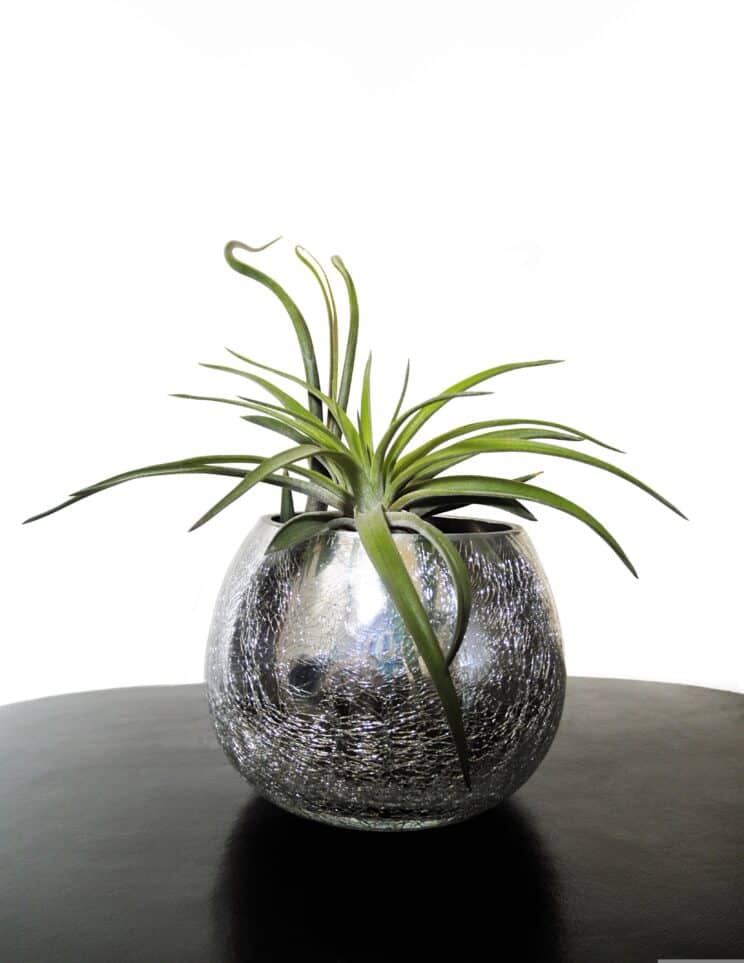
Use them to decorate a mirror, picture frame, bookcase, or window. Drop them into any type of container, whether glass, ceramic or rustic. They will even be at home in a terrarium.
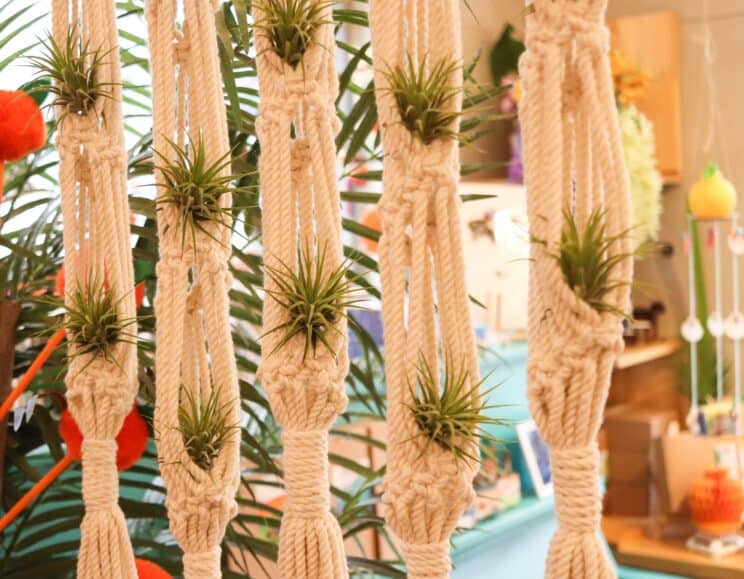
They will thrive in the humidity of a bathroom where they can be suspended from the shower head as well as in a warm bedroom, living room or kitchen. Place them in a plant holder suspended from the ceiling.
Caring for your Tillandsia
Light
Their most important requirement is bright, indirect light near a window. If the leaves don’t get enough light they won’t be able to absorb nutrients from the air and water and they will gradually die. They can take morning sun for up to three hours but more than that will scorch their leaves.
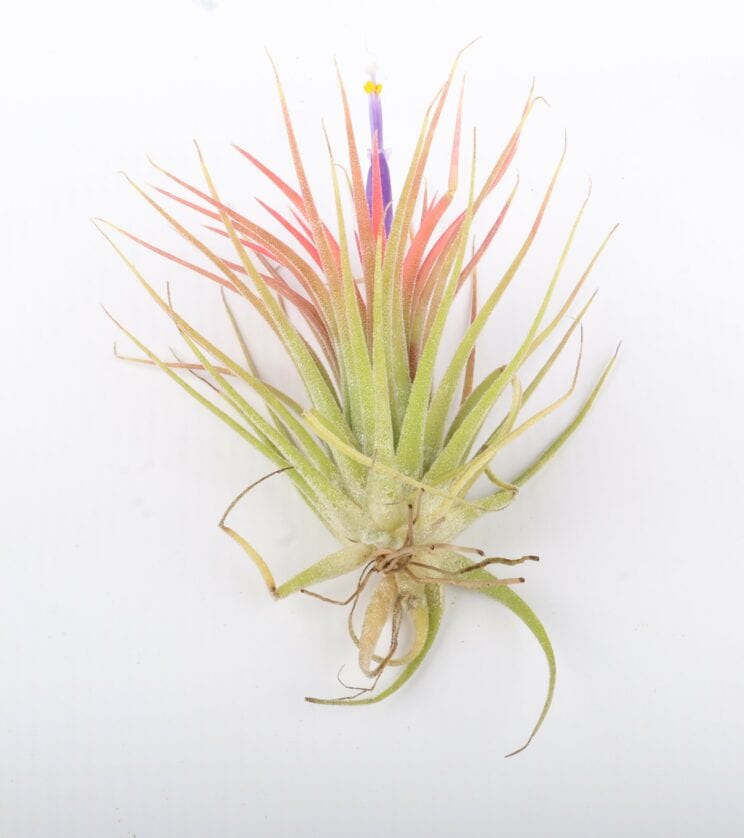
Tillandsias with grey leaves need higher light levels and while green leaved species prefer filtered or bright indirect light.
Fresh air
Because tillandsia obtain their nutrients for air and water, they need a good air flow around them, especially varieties with fine leaves. However, keep them out of draughts, especially in winter.
Water
When grown indoors tillandsia need regular watering. The easiest way to water them is to put them in a bowl of water for 10 to 15 minutes, shake off the water and put them back in place. This can be done once a week in summer, less in winter. They can also be misted but check that they are getting enough moisture. Don’t let moisture stay on the leaves, or where they join the stem as the plants will rot.
Nutrients
Give you plant a nutrient boost every now and then in summer using a liquid fertiliser at a quarter of the recommended strength. This can be added to the water when they are soaked or misted onto the leaves.
Flowering
Like other bromeliads, tillandsia flower when they are fully grown, as long as they receive enough light. After flowering the mother plant produces offsets, called ‘pups’ and then dies. In this way tillandsia’s reproduce and form clumps over time. Remove dead plants from the clumps as they can harbour pests. For more information visit LVG Plants.
Article and images supplied by Alice Coetzee.