
Here’s a guide for matching the right plants with the right space…
It seems as if we are back into cocooning, with higher fuel prices and the expectation of a cold winter to keep us more at home.
The right indoor plants can enhance how our living space feels and functions. There are plants that improve air quality, others that improve humidity, and, above all, bring colour, variety, texture and life into a room.
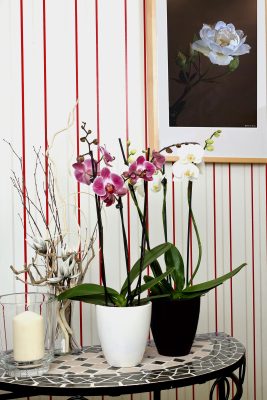
The mood of a room can be changed just by moving plants around or introducing new ones. Match colourful foliage to the room’s colour scheme. Introduce plants into a room that needs to feel cosier.
Go tropical with ferns in the bathroom, revamp your bookcase and make space between the books for trailing plants. Brighten bedrooms with flowering plants and workspaces with undemanding plants that need very little care.
Many plants are remarkably adaptable, liking good light but also tolerating low light which means there is a plant for almost every corner of the home.
Rooms with bright light

Bright light is best for flowering indoor plants as well as foliage plants like palms, fiddle leaf fig, sansevieria, string of pearls (Senecio rowleyanus) succulents, money tree, and variegated foliage plants.
Rooms with east-facing windows that receive morning sun or north-facing windows that receive more sun in winter and less in summer are suitable for plants that like bright light (filtered sun) or bright indirect light.
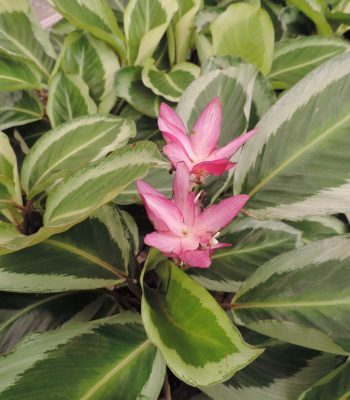
The variegated Calathea ‘Maria’ has large green and creamy white oval leaves. The centre of the leaf looks like a feather and is offset by a wide creamy edging. It needs the same care as all other calathea but a monthly drench with a liquid fertiliser will encourage it to produce star-shaped pink or white flowers in summer. A happy plant can grow up to 90 cm high and wide.
Good to know: without bright light, the leaf colours of variegated plants become dull and the plants don’t grow as well. That’s because only the green portion of the leaves, which contain chlorophyll, are able to convert sunlight into oxygen and carbohydrates to feed the plant for its growth.
Rooms with moderate light
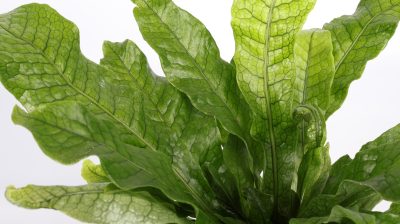
Plants that like moderate light include phalaenopsis, and leafy foliage plants like crocodile ferns, delicious monster, alocasia, philodendrons, Ficus varieties, peace lily, and ZZ plant, as well as plants with coloured or variegated foliage.
Moderate light is generally in rooms with east-facing windows or in north-facing rooms where the light is still bright, but away from direct morning sun or filtered sun. For instance, on a desk, bookcase, table-top, coffee table, dressing room table or bedside table.
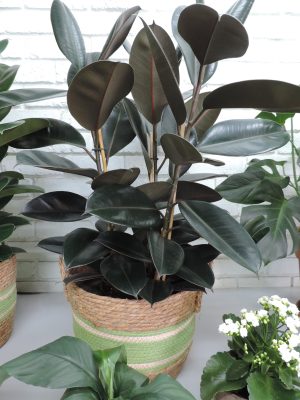
Ficus Robusta ‘Abidjan’ stands out for its dark chocolate leaves with red midrib and new red leaves that slowly turn dark brown, almost black.
Like other Ficus, this classic indoor plant is easy to grow and grows almost anywhere, preferring medium light but tolerating low light. Rather under-water than overwater and wipe the leaves occasionally to keep them looking glossy.
Low light areas
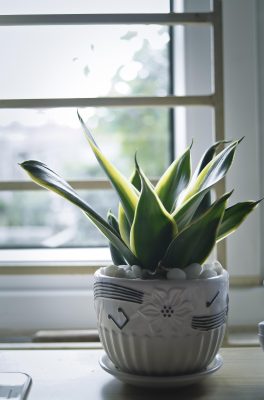
Quite a number of plants that grow with medium light, can cope with low light, like the peace lily, sansevieria, ZZ plant, peperomia, anthurium, bromeliad, schefflera, maidenhair fern, bird’s nest fern, delicious monster, bamboo palm and Golden Pothos, especially if placed in front of a window.
Its also no problem to display them in positions with lower light for two or three days but then move them back into good light.
Rooms with south-facing windows generally qualify as low light rooms. These may be bathrooms, bedrooms, studies, or even kitchens.
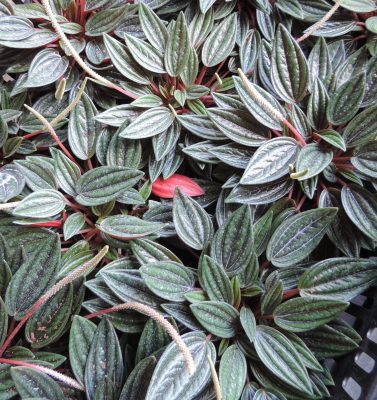
Peperomia rosso ‘Zorro’ is a petite plant with textured, dark green pointed leaves that have a silvery sheen, and deep reddish-brown underside of the leaf. This variety will flower if it receives enough bright indirect light but it can tolerate low light if kept close to window in a warm, humid room.
Keep the soil moist but don’t let it become waterlogged or dry out completely. From spring to autumn, feed monthly with a liquid fertiliser to encourage new leaves.
What if??
A sign that your indoor plant is not receiving enough light could be darker green leaves and spindly growth. Plants may also become susceptible to mealie bug. Yellowing leaves or brown tips could indicate too little water or too much sun.
While you can move plants around into the same kind of light conditions, Ficus varieties generally don’t like to be moved and may drop their leaves if the light and warmth changes.
More details: www.lvgplant.co.za