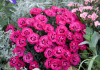
Record winter rainfall along South Africa’s west coast has brought this year’s wildflower bloom on in far greater volume than usual, turning the fleeting display into one of the most intense wildflower events the region has seen in years.
In an era where almost everything is instantly accessible, the greatest luxury is no longer found in things – it is found in being present for a moment that nature alone determines.
Few places illustrate this better than the annual Namaqualand flower season. For just a few weeks each spring, millions of dormant wildflowers transform South Africa’s west coast into one of the world’s most remarkable natural displays before quietly disappearing again.
What is a superbloom, exactly?
The term “superbloom” is used sparingly in nature – and for good reason. It describes a rare event in which an arid landscape, dormant for most of the year, erupts into flower on a scale that seems almost implausible. Namaqualand is one of the few places on Earth where this happens with any regularity, and it is tied entirely to the Succulent Karoo, a semi-desert biome recognised as the only arid region on the planet to qualify as a global biodiversity hotspot.
Part of what makes the bloom so mesmerising is that it is never static. Namaqualand daisies and gazanias are heliotropic, meaning their petals track the sun and close up on overcast days or after dusk – so the display shifts hour by hour, and the same field can look entirely different at 9am, midday and late afternoon.
The flowers won’t wait
For most of the year, South Africa’s far north-western coastline is a landscape of rugged beauty. Granite outcrops, sandy plains and the cold Atlantic Ocean create a dramatic backdrop where hardy succulents quietly survive one of the world’s oldest deserts.
Then winter rain arrives.
Unlike attractions that can be experienced at any time of year, the Namaqualand flowers appear entirely on nature’s schedule. Rainfall, sunshine and temperature determine where and when each display reaches its peak, making every season and every visit slightly different. It is this unpredictability that keeps visitors returning year after year.
The flowering season unfolds over several weeks, with different areas reaching their peak at different times. Namaqua Flower Beach Camp operates annually from mid-August to mid-September, carefully timed to coincide with this remarkable seasonal display and to offer guests the very best opportunity to experience the superbloom at its peak.
A place that appears just once a year
Just as the flowers are temporary, so too is the camp.
Located within Namaqua National Park overlooking the Atlantic Ocean, the seasonal Namaqua Flower Beach Camp is open for only one month each year before disappearing once again.
Rather than permanent buildings, guests stay in spacious en-suite cottage tents designed to blend comfortably into the surrounding landscape. Thoughtfully prepared meals, evenings around the campfire, spectacular sunsets over the ocean and warm South African hospitality create an experience that is both relaxed and memorable, allowing nature to remain the true centre of attention.
The road trip north
For most guests, the journey north is very much part of the experience. The drive from Cape Town winds up the West Coast along quiet roads, through sleepy fishing villages and increasingly wild scenery, with the flowers themselves beginning to appear at the roadside long before Namaqua National Park comes into view. It’s a trip that rewards those who take their time – stopping in small towns, watching the landscape change from vineyards to desert, and arriving at camp with a real sense of having travelled somewhere remote.
For travellers short on time, a new Flying Flower Safari offers an alternative way in. Operated by Africa Sky Runners, the private fly-in experience departs from Stellenbosch and lands less than two hours later on the remote Diamond Coast near Koingnaas, combining scenic flying with an overnight stay at Namaqua Flower Beach Camp.
When the season ends, the camp is carefully dismantled, leaving behind little evidence that it was ever there. Soon afterwards, the flowers return to the earth, waiting patiently beneath the sand for another winter and another chance to bloom.
For more information about Namaqua Flower Beach Camp, open 14 August to 13 September 2026, or the Flying Flower Safari, visit flowercamps.co.za or contact the reservations team at info@experiences.co.za / +27 (0)83 652 5489.