After a life-changing accident, Hunter Tilling has rebuilt her world with courage, creativity, and joy, finding hope, independence, and colour in every brushstroke, swim,
and prayer.
Hunter’s story is one of resilience, transformation, and the bright spark of life that shines even in the face of challenge. When life shifts in an instant, everything familiar can fall away. For Hunter, that moment came on a rainy Good Friday in April 2017, when a car crash left the once vibrant, unstoppable 23-year-old in hospital with severe injuries, including a brain injury that would alter the course of her life. Tasks she once took for granted – walking, talking, feeding herself – suddenly had to be relearned.
Yet from that darkness, something remarkable has emerged. Hunter, now 32, has redefined her world not by what she lost, but by the courage, creativity, and joy she has reclaimed. She swims, she prays, she paints, and in every brushstroke, she discovers a little more of herself. Her story is not about tragedy – it is about transformation, finding colour after the storm, and being yellow on the inside.
Bubbly, outgoing, and impossible to ignore, Hunter grins. “If you don’t know me, you’re bound to get to know me.” She wants to share her story, one that changed in a split second.
On that early evening, Hunter was driving along Riverside Road in Durban North on her way back from promotion work when the head-on collision occurred. She woke in hospital with severe head trauma, fractured vertebrae in her lower back, a broken arm and hip, and a traumatic brain injury that would change everything. She spent more than a month in a coma and remained in hospital for nearly three months. When she finally woke, she could not walk and had to relearn the most basic human tasks.
 “I had to learn everything again from scratch,” she says simply. She is grateful she does not remember the accident itself, but what followed required courage she did not know she possessed.
Before the crash, Hunter describes herself as stressed and independent, working full time and juggling promotion work to pay the bills. “I was stuck up and full of it, and I gave my parents a hard time,” she admits. Life was fast, busy, and outward facing, until the accident forced everything to stop.
Today, her world is smaller but deeper. From having her own flat and managing life on her own terms, she now lives back in her childhood home in Hatton Estate, Pinetown, with her family, who have become her greatest anchors. “I know I pushed my parents away before,” she says. “Now I need them close to my heart.” Their steady support has helped rebuild her life, piece by piece.
Her weeks follow a gentle rhythm. Mondays and Wednesdays are spent at Headway Natal, an outpatient rehabilitation centre in Westville that supports people living with brain injury and stroke. Tuesdays and Thursdays are quieter, spent at home listening to music, drinking water, and watching television. Music, she says, is her happy place.
Fridays are sacred. In the afternoons, she paints. Through Tom Rout, a friend at Headway, she discovered Dee Wade’s art classes in Hillcrest. Before the accident, she was not artistic.
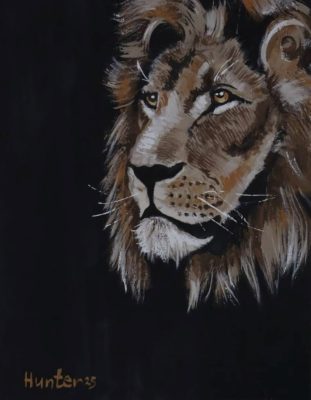
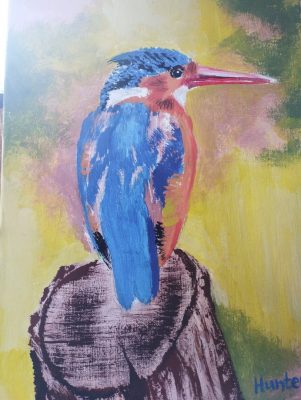
“My sister Storm is the arty one,” she says. Yet something opened in her through paint.
“Creating makes me feel like a superstar,” she says. “I feel yellow inside – sunshine and happiness.” She works mostly in acrylic, painting animals and scenery inspired by images she loves. Under Dee’s mentorship, she pushes beyond her comfort zone, attempting pieces she once thought impossible. Each canvas is more than a picture – it is therapy, expression, and proof.
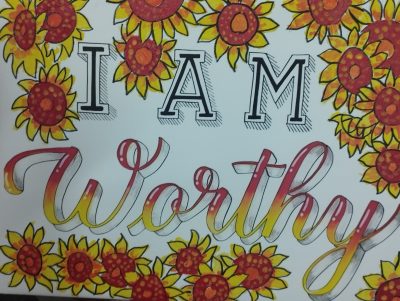 Art did not come from natural talent. It came from necessity, from stillness, from healing, and from learning to sit with herself. At the easel, Hunter is not defined by what she struggles with, but by what she creates.
Life after brain injury is layered with challenges. Hunter lives with seizures triggered by stress and hormones, now managed with medication. She walks with a limp, so carrying a cup of coffee can often result in a spill, she sometimes chokes when eating, and writing is incredibly difficult. Memory can falter, and relationships are harder to form.
“I wish people would step aside for five minutes and put themselves in my shoes,” she says. “Have patience. Don’t judge. Just come and talk to me. Don’t avoid me.” Loneliness is real.
When she is around people, she feels joy, when she is alone, the quiet ache of isolation can be sharp. Yet she has found community at Headway. “It’s like my family away from home,” she says. “They build you up into the person you are meant to be.”
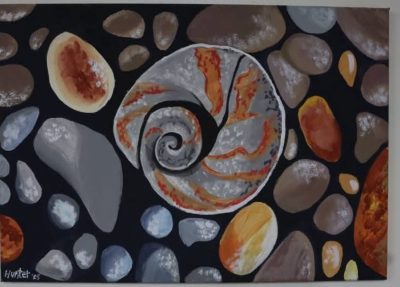 Swimming, something she loved long before the accident, has become part of her rehabilitation. She once trained in the same club as Olympic medallist Chad le Clos. Returning to the pool after months of rehabilitation felt like reclaiming a piece of herself.
“I’m walking, talking, swimming,” she says, pride shining through.
Faith also steadies her. Prayer frames her days. “God’s always there for you,” she says. “No matter where you think you are in life.” On difficult days, when frustration rises, she breathes in through her nose and out through her mouth, listens to music, prays, and begins again.
Her dreams remain bright. She laughs when she says she wants to become a millionaire, hopes to skydive one day, and wants to visit London, where her father grew up. She imagines living in a peaceful country filled with happy people.
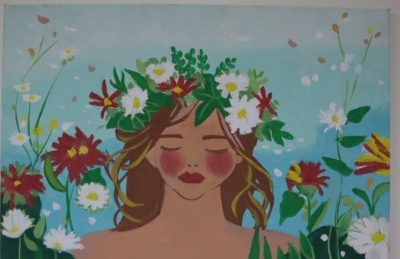 Beneath the humour lies something deeper. Hunter longs for independence. She cannot work or drive and depends largely on her family. She hopes to earn an income from her art, to buy her own clothes and necessities, to contribute, and to build something of her own – not for luxury, but for dignity. Each painting she completes is a step towards that independence. She is still waiting for support from the Road Accident Fund (RAF), which would help her continue rebuilding her life.
More than anything, she wants her life to carry a message. “Life is short. Make your dreams come true. Don’t waste it.” She urges people to focus on the road, to live in the present, and to build towards the future rather than dwell on the past. “Don’t think, ‘I should have.’ Think, ‘I will.’”
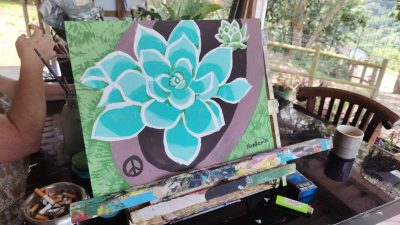 Her journey is not a tragedy – it is a rebuilding, a turning over of a new leaf. The young woman who once raced through life now measures it in brushstrokes, prayers, and pool lengths, in small victories, in yellow.
If you invest in one of Hunter’s paintings, you are not simply buying art, you are investing in courage, healing, and independence slowly reclaimed. Donations of art supplies, commissions, or purchases of her work all contribute to a future where she can stand a little taller in her own strength.
Hunter Tilling’s life changed in a moment on a rain-soaked road. Today, she paints in sunshine, choosing
colour over shadow.
Details: You can contact Hunter on 083 320 0538.