Shafinaaz Hassim on curating literary spaces, amplifying voices, and celebrating the enduring power of books
By Sanabelle Ebrahim
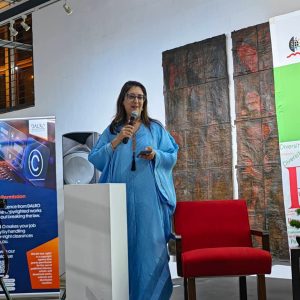
In a literary landscape shaped by urgency and imagination, Shafinaaz Hassim stands as a thoughtful curator, connector, and advocate for the written word. Through her work on the Time of the Writer Festival and her long-running radio segment BookBytes on Salaamedia, she continues to create spaces where stories are not only shared, but deeply engaged.
At the heart of this year’s festival was the theme “Ink-stitutional Power”, a phrase that captures resistance and responsibility. For Hassim, the written word remains a vital tool for challenging systems, interrogating power, and reshaping public consciousness. Through memoir, fiction, and political writing, the festival positioned literature as a form of social documentation, one that preserves history while influencing the future. It is, she suggests, through the interrogation of texts that knowledge is produced and perspectives are shifted.
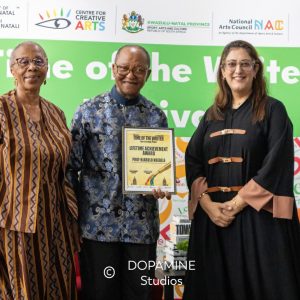
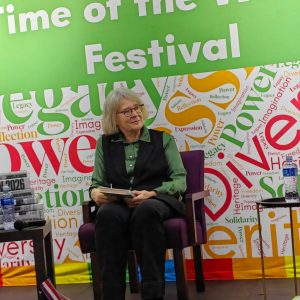
One of the most meaningful aspects of the festival was its opening panel, which brought together literary heavyweights such as Antjie Krog and Njabulo Ndebele. For Hassim, engaging with figures of this calibre was humbling and affirming. Their work, long associated with confronting institutional power, echoed the festival’s central theme. Their presence served as a reminder that writers are not passive observers, but active participants in shaping discourse, particularly when institutions fall short of serving the people.
Yet, behind the polished programme lies a complex curatorial process. Hassim reflects candidly on the challenges of securing key authors, navigating availability, and refining the programme until it feels cohesive. Managing personalities and expectations is part of the process, but she notes that the literary community is, more often than not, collaborative and supportive. Flexibility, patience, and a willingness to adapt are essential qualities in bringing such a multifaceted event to life.
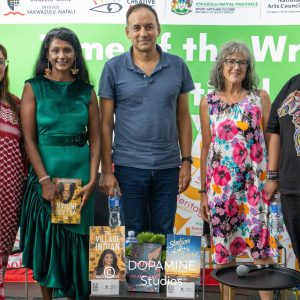
Accessibility and representation remain central to Hassim’s curatorial approach. Her aim is to reflect a broad cross-section of the literary ecosystem, from independently published authors to those backed by major publishing houses. Geographic diversity is equally important, with efforts made to include voices from across South Africa’s provinces despite logistical constraints. Language, too, plays a key role. This year saw the introduction of an online session exploring Afrikaans across generations, as well as a dedicated isiZulu programme curated by her colleague, Thalente Ndlovu.
Perhaps most notably, the festival expanded its reach through its inaugural children’s programme, developed in partnership with eThekwini Libraries. By bringing storytelling directly into library spaces, the initiative created opportunities for young audiences to engage with literature through stories, songs, and visual elements. It is a reminder that cultivating a reading culture begins early, and that access is as much about presence as it is about content.
Beyond the festival stage, Hassim’s voice continues to resonate through BookBytes, now in its sixth year. With over 200 author interviews to date, the platform has become a trusted space for literary conversation. Her selection process is guided by awareness and intention. With a finger firmly on the pulse of the South African publishing scene, she curates a diverse range of titles, encompassing local and international works, as well as cultural and Islamic literature.
Radio, she explains, offers a unique intimacy. While live events create shared, immediate experiences, radio extends the life and reach of literary engagement. Both BookBytes and the hybrid format of the Time of the Writer Festival have enabled audiences far beyond KwaZulu-Natal, and even South Africa, to participate in these conversations. This expanded reach not only benefits readers, but provides authors with a broader platform to connect with new audiences.
Importantly, platforms like BookBytes do more than promote books. They nurture curiosity, encourage critical thinking, and invite listeners into a dialogue with ideas. In many ways, a radio book show functions like a living reading list, one that sparks internal reflection while offering direct access to the voices behind the texts. For book clubs and individual readers alike, it becomes a gateway to discovery.
As World Book and Copyright Day 23 April approaches, Hassim reflects on its personal significance. In a time increasingly saturated with AI-generated content, the celebration of original thought and creative labour feels especially urgent. She encourages simple but meaningful acts: sharing a book review, reading to a child, or even attempting to write one’s story.
Looking ahead, her vision for South Africa’s literary future is grounded and hopeful. She believes that writers and readers hold the power to influence society, challenge norms, and inspire change. Festivals and media platforms, when thoughtfully curated, can amplify this impact by bringing diverse voices into conversation. Whether through fiction, memoir, or poetry, stories remain a powerful vehicle for connection and transformation.
In the end, Hassim returns to a simple truth: stories entertain, heal, and build us. In gathering them, sharing them, and listening closely, we begin to understand not only the world around us, but our place within it.